Understanding Midlife Transitions, Finding Purpose and Moving Forward
10 July – written by Katrin Kemmerzehl – Blog

Perhaps this year feels different.
Maybe you’re in your 30s, 40s or beyond and finding yourself reflecting more than you used to. You catch yourself wondering, “Is this where I thought I’d be by now?”
It’s not necessarily that your life is unhappy. From the outside, things may even look as though they’re going well. You have a job, responsibilities, people you care about and people who rely on you.
But perhaps your life doesn’t match the picture you once had in your mind.
Maybe you’re questioning your relationship and wondering whether you’ve grown in different directions. Perhaps you’re single and never imagined you would be at this stage of your life.
You may have always assumed that having children was something you would think about “one day”. But life had other plans. Work became busier. Relationships changed. There were bills to pay, careers to build, family responsibilities, friendships to maintain and endless things demanding your attention. Now you find yourself wondering whether that chapter is something you still want, whether it’s still possible, or why it suddenly feels so important.
Or perhaps you’re already raising children and wondering how the years have passed so quickly. Between work, school runs, packed lunches, family holidays, after school clubs and trying to keep everyone else afloat, it’s easy to lose sight of yourself.
The holidays bring this into sharp focus. There are plans to make, childcare to arrange, days out to organise and everyone’s needs to consider. While it can be a joyful time, it can also be exhausting. Sometimes, amidst all this busyness, you might find that you’ve forgotten to check in with yourself about how you’re doing.
You might even find yourself looking at your life and thinking,
“How did I get here?”
“What do I want the next part of my life to look like?”
“When did I stop asking myself what I need?”
These questions can feel uncomfortable. They often surface after a birthday, a career change, life changes, children becoming more independent, shifts in relationships, or because life slows down enough for us to notice them.
If any of this feels familiar, you’re not alone.
Many people start counselling during this stage of life because something within them is seeking attention. This period encourages us to gain a better understanding of ourselves, to reevaluate our changing priorities, or to reconnect with a version of ourselves that may have become difficult to hear beneath the pressures of everyday life.
When the Life You’ve Built Starts to Feel Different

One of the more challenging parts of adulthood is realising that feeling grateful and feeling uncertain can exist at the same time.
You may appreciate the life you have created while also wondering whether it still fits who you are becoming. You might care about your family and still notice a longing for more time, freedom or space for yourself. You may value your work while questioning whether it continues to give you a sense of meaning.
These mixed feelings are not unusual. Research into adult development suggests that people often become increasingly reflective as they move through adulthood, becoming more aware of their values, priorities and the gap between the life they imagined and the life they are living (Lachman, 2015; Charles & Carstensen, 2010).
Many of us grow up with an idea of how life is supposed to unfold. We absorb messages about success, relationships, family, careers and what happiness should look like. Yet real lives rarely follow a predictable path.
Sometimes the things we worked towards bring the fulfilment we hoped for. Sometimes they don’t. Sometimes circumstances change, and we find ourselves adapting to a life we did not expect.
These moments can bring a sense of loss. Not always a dramatic loss, but the slow recognition that certain possibilities may have changed.
Perhaps the relationship you imagined would last forever ended. Perhaps your career developed differently than expected. Perhaps becoming a parent, not becoming a parent, or questions around family life have brought unexpected emotions. Perhaps you are simply noticing that the person you are today has different needs and hopes from the person you were earlier in life.
Psychologists describe these periods as part of the ongoing process of identity development. Throughout adulthood, we continue to revise our understanding of ourselves, our relationships and the meaning we make from our experiences (McAdams, 2013).
This kind of reflection is a normal part of being human.
Why These Questions Often Appear in Our Thirties, Forties and Beyond

Although the phrase “midlife crisis” is often used in everyday conversation, research suggests that most people do not experience midlife as a period of dramatic breakdown. Instead, many experience a period of reassessment, adaptation and growth.
Midlife is increasingly understood as a complex stage of development shaped by changing roles, relationships, responsibilities and a growing awareness of what matters most (Lachman, 2015).
For many people today, these questions begin earlier than previous generations might have expected. The pathways into adulthood have changed. Education often takes longer, careers may be less predictable, relationships and parenthood may happen at different stages, and many adults find themselves balancing multiple demands at once.
It is also a stage where people often become more interested in living in a way that feels meaningful rather than simply meeting expectations. Research on wellbeing suggests that a sense of purpose, personal growth and living according to one’s values are important parts of psychological health (Ryff, 1989; Huta & Waterman, 2014).
So perhaps the question is not only: “Have I achieved enough?”
but also:
“Is the life I’m living still the life I want?”
“Is this all there is?”
“What am I doing with my life?”
These questions can feel unsettling, but they can also be the beginning of a deeper conversation with yourself about what matters now and what you want the next chapter to look like.
Finding Meaning in the Next Chapter

Psychologist Erik Erikson suggested that midlife is often a time when people naturally begin to think less about proving themselves and more about what matters to them, the people they care about and the contribution they want to make (Erikson, 1950/1993).
Generativity is not about achieving something extraordinary. It is about feeling connected to something meaningful beyond ourselves, whether that is through relationships, caring for others, being part of a community, sharing our experience or creativity, work.
For many people, this becomes a time when the question changes. Earlier in life, we may be focused on creating security, achieving goals and finding our place in the world. Later, we may start to think more about what matters, what we want to nurture and whether the life we are living still feels meaningful.
Research suggests that having a sense of purpose and contribution is closely linked with wellbeing and psychological health throughout adulthood (Ryff, 1989; McAdams & de St. Aubin, 1992; Gruenewald et al., 2016).
Perhaps this is why periods of transition can feel so significant. They encourage us to pause and notice what has changed, what we value now and what we might want more of in the years ahead.
Making Space for Reflection

Periods of transition can feel uncomfortable because they often involve uncertainty. We naturally want answers, but sometimes the first step is to create space to understand what is happening.
Many people spend years focusing on what needs to be done: work, family responsibilities, caring for others and the everyday demands of life. It can be easy to lose touch with your own needs and priorities when so much of your energy goes towards keeping everything moving.
At some point, you may find yourself reflecting on what you have learned, what matters to you now and whether the life you are living still feels meaningful.
These questions do not always have immediate answers. Often, clarity comes through taking time for yourself, talking things through and allowing yourself the space to explore what this stage of life means for you.
When Understanding Yourself Comes Later in Life

For some people, this period of reflection also brings a new understanding of themselves. This can be particularly meaningful for neurodivergent people, including those with ADHD, AuDHD or autism, who may have spent many years adapting, coping and trying to meet expectations without fully understanding why some aspects of life have felt more challenging.
As responsibilities increase, old coping strategies may become harder to maintain. Some adults begin to recognise patterns in their experiences and explore whether neurodivergence might be part of their story.
Research highlights that many autistic adults are identified later in life, and that gaining this understanding can influence identity, self-compassion and access to appropriate support (Lai & Baron-Cohen, 2015; Leedham et al., 2020).
Whether or not neurodivergence is part of your experience, developing a deeper understanding of yourself can be an important part of growth and change.
Counselling as a Space to Pause and Reflect

Midlife is often described as a time of change, but perhaps it is more accurate to think of it as a time of rediscovery.
It can be an opportunity to pause, reflect on the life you’ve lived so far and ask yourself what feels important now. From there, you can begin to consider what you would like the next chapter of your life to look like. That doesn’t necessarily mean making dramatic changes. Sometimes the most meaningful changes begin with having the time and space to really listen to yourself.
Counselling can offer that space. It provides an opportunity to pause, untangle what feels confusing and explore your thoughts without judgement. Together, we can make sense of what you’re experiencing and explore what feels important to you at this stage of your life.
If this article has resonated with you, perhaps it’s because something in your life is asking for your attention. Whether you’re navigating change, feeling stuck, questioning your direction or looking for a space to reflect, I’d be pleased to support you. If you’d like to explore whether counselling feels right for you, you’re very welcome to get in touch.
References
- Charles, S. T., & Carstensen, L. L. (2010). Social and emotional aging. Annual Review of Psychology, 61, 383–409.
- Erikson, E. H. (1950). Childhood and Society. W. W. Norton & Company.
- Gruenewald, T. L., Tanner, E. K., Fried, L. P., Carlson, M. C., Xue, Q. L., Parisi, J. M., Seeman, T. E., Albert, M. S., Brandt, J., & Rebok, G. W. (2016). Enhancing generativity via intergenerational activity engagement in later life. The Journals of Gerontology: Series B, 71(4), 661–670.
- Huta, V., & Waterman, A. S. (2014). Eudaimonia and its distinction from hedonia: Developing a classification and terminology for understanding conceptual and operational definitions. Journal of Happiness Studies, 15(6), 1425–1456.
- Lachman, M. E. (2015). Mind the gap in the middle: A call to study midlife. Research in Human Development, 12(3–4), 327–334.
- Lai, M. C., & Baron-Cohen, S. (2015). Identifying the lost generation of adults with autism spectrum conditions. The Lancet Psychiatry, 2(11), 1013–1027.
- Leedham, A., Thompson, A. R., Smith, R., & Freeth, M. (2020). “I was exhausted trying to figure it out”: The experiences of females receiving an autism diagnosis in middle adulthood. Autism, 24(1), 135–146.
- McAdams, D. P. (2013). The redemptive self: Stories Americans live by (Rev. ed.). Oxford University Press.
- McAdams, D. P., & de St. Aubin, E. (1992). A theory of generativity and its assessment through self-report, behavioural acts and narrative themes in autobiography. Journal of Personality and Social Psychology, 62(6), 1003–1015.
- Ryff, C. D. (1989). Happiness is everything, or is it? Explorations on the meaning of psychological well-being. Journal of Personality and Social Psychology, 57(6), 1069–1081.
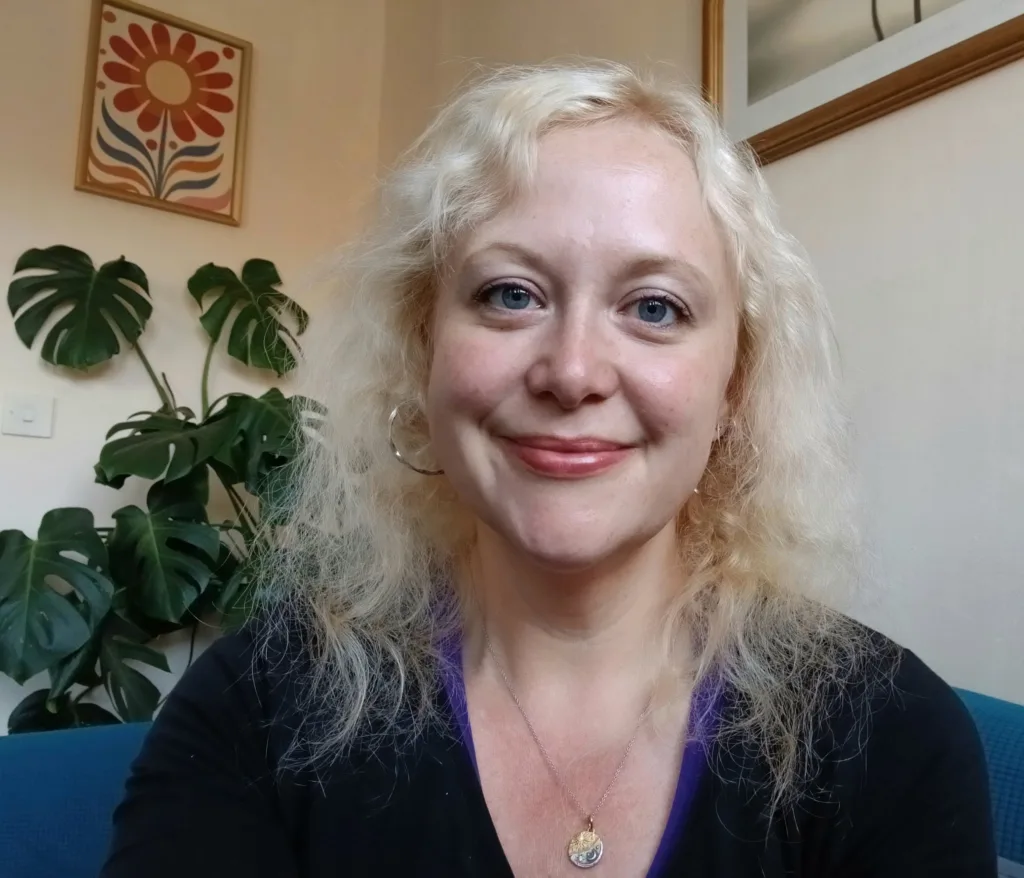
Katrin Kemmerzehl
I am a qualified psychotherapeutic counsellor in Newcastle upon Tyne.
Please get in touch if you’re interested in arranging a consultation.
Pingback:Finding Yourself Again After Life Has Changed - Warm and Friendly Counselling