Exploring change, identity, and the questions that often bring people to counselling
20 March – written by Katrin Kemmerzehl – Blog

There are moments when life changes on the outside, and we feel it on the inside too.
Sometimes the change is obvious. A relationship ends, a diagnosis arrives, a child is born, a job is lost, a loved one dies.
Sometimes it’s harder to name. Life looks more or less the same, but something feels different. You might notice it in small ways:
- You wake up in the morning with a heaviness you can’t explain.
- You’re talking to someone and halfway through a sentence, you forget what you were about to say.
- You find yourself scrolling, pausing, wandering through your day without really feeling connected to it.
- You go through the usual rhythms, making tea or coffee, replying to messages, getting things done and something feels out of place.
Everything looks the same on the outside. But inside, something feels unfamiliar and a bit different. Somewhere in the background, a question begins to form: Who am I now?
When life changes, the self often follows

We often imagine identity as something fixed. Something we find and then hold onto. But in reality, it tends to shift and adapt alongside our lives.
As we move through different stages of life, relationships, and experiences, our sense of self evolves too. Developmental and existential perspectives both suggest that identity is something we keep shaping over time (Erikson, 1968; Yalom, 2008).
You might not notice it at first. Then one day, something that used to feel comfortable and familiar doesn’t quite anymore. A role, a routine, a way of being. And it’s not always clear what to replace it with.
The in-between space: not who you were, not yet who you will be

There’s a particular kind of feeling that can show up here. You’re no longer who you used to be, but you don’t yet feel like someone new. You might find yourself looking at your life and thinking, “This used to make sense to me.”
William Bridges describes this as a transition space, a period where the old has loosened but the new hasn’t fully formed yet (Bridges, 2004). It can feel uncertain. Even unsettling.
And yet, it’s also where something important is happening. Lori Gottlieb writes about the grief of the life we imagined. The version we thought we would be living by now (Gottlieb, 2021).
But alongside that grief, something else can emerge. Not the life you expected, but a life that might feel more true.
When life changes: the moments many people seek support

People often come to counselling at these kinds of moments. Not always in crisis. More often, with a sense that something isn’t quite right or feels a bit ‘off’.
You might recognise this in yourself:
- a growing sense of disconnection
- feeling unsure about direction
- noticing changes in relationships
- feeling stretched, tired, or out of sync
These are very human responses to change (Cooper, 2008). And they’re often the beginning of something worth paying attention to.
Finding your place: emerging adulthood and becoming independent

You might remember a time when everything felt like it was just beginning. Or you might be in it right now. Leaving school. Starting something new. Trying to work out where you fit.
This stage is often described as a time of identity formation (Erikson, 1968), but that can sound more straightforward than it feels.
In reality, it might look like:
- wondering how to connect with others
- feeling different in ways you can’t quite explain
- trying to make decisions without feeling ready
- comparing yourself to people who seem more certain
If you’re neurodivergent, this stage can carry an extra layer. You might already have a sense that social rules feel unclear, or that you’re working harder than others to keep up.
Transitions can feel intense. New environments can take time to adjust to. And many people are staying at home for longer now. That can be supportive, and it can also bring mixed feelings. You might feel safe, and at the same time wonder when things will begin to move.
Psychological perspectives suggest that how we feel is often shaped not only by who we are, but also by the situations we find ourselves in (Zimbardo & Gerrig, 2017).
There isn’t a single right timeline here. This stage is less about getting it right, and more about slowly discovering what fits.
Feeling unsure about direction in your 20s and 30s

You might have imagined that by now, things would feel more settled and clearer. But instead, you find yourself asking questions you thought you’d already answered.
Am I on the right path? Is this what I want?
From the outside, your life might look like it’s moving forward. You might be working, in a relationship or single, building something.
And still, there can be a sense of uncertainty underneath. You might notice it when you compare yourself to others. Or when you have a rare moment to pause and realise you’re not sure what you’re aiming for anymore.
This isn’t unusual. For some people, especially those who have spent years adapting or trying to fit in, this stage becomes a moment of noticing. Noticing what feels right and what doesn’t.
The Rush Hour of Life: balancing work, family, and yourself

There’s a stage in life where everything seems to happen at once. Work becomes more demanding. Relationships deepen or change. Family life takes up space, in both meaningful and exhausting ways.
You might find yourself moving from one role to another without much pause. Replying to emails. Sorting things at home. Supporting others. Keeping things going.
From the outside, it can look like you’re managing. Inside, it might feel different. You might feel tired in a way that doesn’t quite go away. You might realise you haven’t had time to think about yourself in a while.
For neurodivergent people, this stage can feel especially intense. Busy environments, constant demands, and the ongoing effort of adapting can build up over time. What once felt manageable might now feel draining.
You might start to wonder: Is this sustainable? Where am I in all of this?
When relationships feel different

Relationships don’t stay the same. Even strong, caring relationships can reach points where something feels stuck.
You might notice that you keep having the same conversation. Or that you’re talking, but not quite understanding each other.
It can feel confusing, especially when you care. Often, these patterns develop gradually, ways of responding to each other that made sense at one point, but over time begin to create distance (Johnson, 2008).
For example, one partner might need space when things feel intense, while the other reaches for closeness. Both responses make sense. But together, they can create a feeling of missing each other.
If neurodiversity is part of the relationship, there may be additional layers. You might experience differences in communication style, emotional expression, sensory or social needs. Without understanding, these differences can feel like disconnection. With time and curiosity, they can begin to make more sense (Milton, 2012).
Many couples come to counselling not because they want to separate, but because they want to find their way back to each other.
Navigating relationship endings and separations

When a relationship ends, it can feel like more than the loss of the relationship itself. You might lose routines, shared plans, a sense of who you were within that partnership.
You might find yourself asking questions you didn’t expect: Who am I now? What does my life look like from here?
It can feel disorienting. Research suggests that separation can affect how clearly we experience ourselves, especially when our lives have been closely connected (Slotter et al., 2010).
There may be grief. There may be relief. Often, there is both. And slowly, over time, there can be a process of rediscovery. Not rushing to “move on,” but gradually finding your footing again.
Friendships changing over time
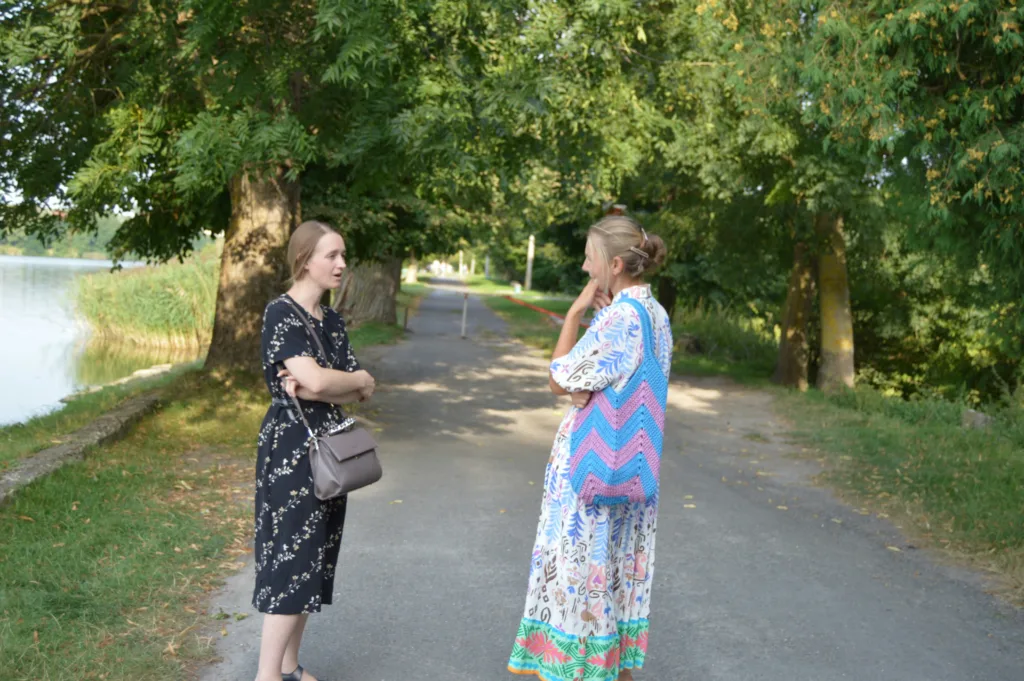
You might notice that your friendships have changed. People move. Lives and priorities evolve.
You might have fewer friendships than you once did. And sometimes, they feel more meaningful. Over time, many people begin to focus more on relationships that feel emotionally significant (Berk, 2018).
You might find yourself drawn to connection that feels easier, more mutual, more understanding. Especially if you’ve spent years feeling different, this can bring a sense of relief. With less pressure to fit in comes more space to be yourself.
Understanding yourself after a diagnosis or new realisation
For some people, a diagnosis, for example of neurodivergence, or a new understanding of themselves brings a moment of clarity.
Things begin to make sense in a way they didn’t before. You might look back and realise why certain situations felt difficult. Why you experienced the world the way you did.
There can be relief in that, but also complexity. You might feel sadness about what wasn’t recognised earlier. Or find yourself rethinking parts of your life through a new lens.
Research shows that this process often includes both relief and grief, alongside a reshaping of identity (Leedham et al., 2020).
Rather than becoming someone different, you’re understanding yourself more fully. And from there, something else can begin. A chance to make choices that fit you better.
Midlife: a time of reflection, adjustment, and possibility

Midlife is often talked about as a crisis. But for many people, this stage of life offers a chance to reflect. A moment where something in you begins to ask: Is this how I want the next part of my life to feel?
You might have built a lot by this point. Work, relationships, responsibilities. And still, something moves you. You might notice a restlessness. Or a sense that you’ve been on a certain path for a long time, and you’re no longer sure it fits in the same way.
This isn’t necessarily about wanting to change everything. Often, it’s more subtle. A desire for things to feel more authentic, aligned and more sustainable. More like you.
For some, this is also where the impact of long-term coping becomes clearer. If you’ve spent years adapting, pushing through, or meeting expectations, you might begin to feel the weight of that. Especially if you are neurodivergent, the effort of years of adjusting to environments that didn’t quite fit can start to show (Hull, 2017).
Midlife can then become a turning point. Not a dramatic overhaul, but a gradual shift. You might begin to:
- reconsider what matters
- make small changes in how you live or work
- allow more space for rest
- move towards relationships that feel more mutual
Yalom suggests that becoming aware of life’s limits can deepen how we engage with it (Yalom, 2008). Not in a rushed way. But in a more intentional one.
Later life transitions: change, loss, and continuity

Later life can bring its own kind of change. Retirement. Shifts in health. Loss of people who mattered deeply.
Life may look different and there can be a process of adjusting to that. Julia Samuel describes grief as something we learn to carry, rather than something we move past (Samuel, 2022).
Alongside loss, there can also be a deepening. A clearer sense of what matters. A different relationship with time. Moments of connection that feel especially meaningful. Life continues in a new way.
Meaning and purpose across the lifespan

Across all of these stages, one question often remains, quietly in the background: What gives my life meaning now?
The answer can change over time.It might be found in relationships. In small moments. In the way you choose to live your day.
Meaning isn’t something you need to solve all at once. It tends to emerge, gradually, as you begin to notice what feels important.
A gentle way of finding yourself again

If you find yourself in a place where life has changed and you are not quite sure who you are within it, you are not alone.
These moments can be a chance to pause and notice what’s going on. Finding yourself again is not about going back to who you were. It is about getting to know who you are now.
Counselling can offer a space to explore whatever feels important, at your own pace and time. If something in this speaks to you, you’re very welcome to reach out.
References
- Arnett, J. J. (2004). Emerging adulthood: The winding road from the late teens through the twenties. Oxford University Press.
- Berk, L. E. (2018). Development through the lifespan (7th ed.). Pearson.
- Botha, M., & Frost, D. M. (2020). Extending the minority stress model to understand mental health problems experienced by the autistic population. Society and Mental Health, 10(1), 20–34.
- Bridges, W. (2004). Transitions: Making sense of life’s changes (2nd ed.). Da Capo Press.
- Cooper, M. (2008). Essential research findings in counselling and psychotherapy. SAGE.
- Erikson, E. H. (1968). Identity: Youth and crisis. W. W. Norton & Company.
- Gottlieb, L. (2021). Maybe you should talk to someone. Scribe Publications.
- Hull, L., Petrides, K. V., Allison, C., Smith, P., Baron-Cohen, S., Lai, M.-C., & Mandy, W. (2017). “Putting on my best normal”: Social camouflaging in adults with autism spectrum conditions. Journal of Autism and Developmental Disorders, 47, 2519–2534.
- Johnson, S. M. (2008). Hold Me Tight: Seven Conversations for a Lifetime of Love. Little, Brown.
- Leedham, A., Thompson, A. R., Smith, R., & Freeth, M. (2020). “I was exhausted trying to figure it out”: The experiences of females receiving an autism diagnosis in middle to late adulthood. Autism, 24(1), 135–146.
- Milton, D. E. M. (2012). On the ontological status of autism: The ‘double empathy problem’. Disability & Society, 27(6), 883–887.
- Samuel, J. (2022). Grief works: Stories of life, death and surviving. Penguin.
- Slotter, E. B., Gardner, W. L., & Finkel, E. J. (2010). Who am I without you? The influence of romantic breakup on the self-concept. Personality and Social Psychology Bulletin, 36(2), 147–160.
- Yalom, I. D. (2008). Staring at the sun: Overcoming the terror of death. Jossey-Bass.
- Yalom, I. D. (2015). Creatures of a day: And other tales of psychotherapy. Basic Books
- Zimbardo, P. G., & Richard J. Gerrig (2017). Psychology and Life (20th ed.). Pearson.
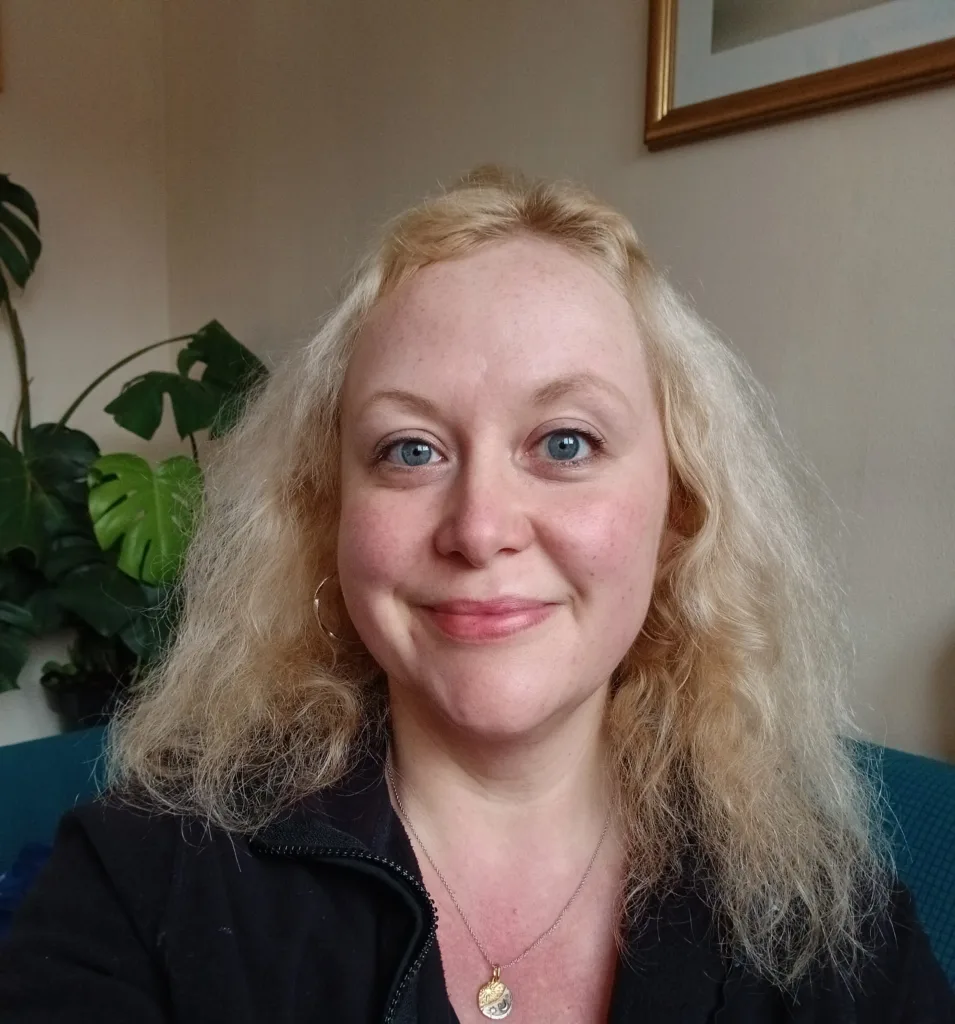
Katrin Kemmerzehl
I am a qualified psychotherapeutic counsellor in Newcastle upon Tyne.
Please get in touch if you’re interested in arranging a consultation.