Autism, ADHD, AuDHD – identity, relationships, and learning to live more authentically
26 February – written by Katrin Kemmerzehl – Blog

For many neurodivergent women, life has always felt meaningful, intense, and thoughtful – and at the same time, strangely hard to inhabit.
There may be a deep inner life, strong values, emotional depth, and creativity, alongside a persistent sense of effort: effort to belong, to understand, to relate, to hold everything together.
Autistic, ADHD, and AuDHD women often reach adulthood having done an extraordinary amount of invisible work. They have adapted, observed, compensated, and endured in environments that rarely reflected them back accurately.
This article explores how neurodivergence shows up in women, particularly around identity, friendships and work relationships, and existential themes such as isolation, meaning, and belonging – and how a gentler, more compassionate way of relating to oneself can begin to emerge.
Why So Many Women Go Unseen

Neurodivergence often presents differently in women than in men, not because it is less significant, but because it is shaped by social expectations and early relational learning.
Many girls are encouraged to be emotionally attuned, socially aware, and accommodating. As a result, autistic and ADHD traits are more likely to be internalised.
Instead of being disruptive or visibly struggling, some women may become anxious, perfectionistic, people-pleasing, or overwhelmed (Quinn & Madhoo, 2014; Lai et al., 2015).
Many develop sophisticated masking strategies: observing closely, copying social behaviours, suppressing sensory needs, and pushing through exhaustion.
This can lead to being perceived as coping well, while privately struggling. Research on social camouflaging shows that masking is particularly common among autistic women and is associated with increased emotional exhaustion, anxiety, and later diagnosis (Hull et al., 2017; Bargiela et al., 2016).
These patterns help explain why many women are only recognised as neurodivergent in adulthood, often following burnout, relational rupture, or prolonged mental health difficulties rather than through early identification.
Growing up without a clear mirror
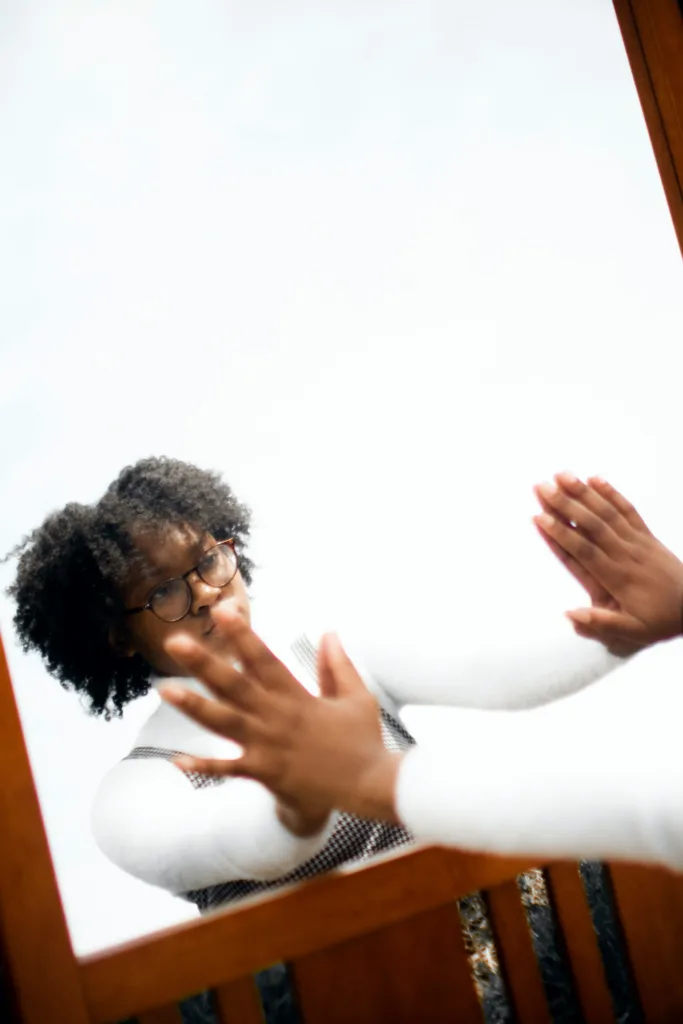
Neurodivergence in women is still frequently overlooked or recognised late. Many girls learn early that being sensitive, intense, distracted, deeply curious, or emotionally attuned is something to manage privately.
Because autism and ADHD have historically been understood through male-centred presentations, women who are articulate, empathic, or high-masking are often missed altogether (Lai et al., 2015; Quinn & Madhoo, 2014).
Instead of being supported, many women learn to adapt. They watch carefully. They learn social rules, emotional timing, and expectations. They become skilled at fitting in.
This often leads to masking, not as a conscious choice, but as a relational survival strategy. Masking helps maintain connection, employment, and social acceptance, yet research shows it is associated with exhaustion, anxiety, and burnout, particularly for autistic women (Hull et al., 2017).
One of the costs of masking is identity confusion. When adaptation becomes the norm, it can be hard to know who you are beneath it.
Identity beyond roles: Who am I if I stop adapting?

Many neurodivergent women organise their identity around roles: the competent professional, the emotionally available friend or daughter, the partner who accommodates, the mother who holds everything together. These roles are often inhabited with care and contribution.
However, during specific life transitions like moving out, experiencing burnout, receiving a late diagnosis, having children, going through menopause, or facing changes such as relocating, switching careers, or ending a relationship, these identities may start to feel more fragile.
Someone may experience a sense of confusion, emptiness or disorientation: If I stop doing what I used to do, who am I?
Research with late-diagnosed autistic women suggests that identity reconstruction, while emotionally complex, can be deeply validating. Diagnosis often allows women to reinterpret their history with more coherence and self-understanding, shifting from self-blame to self-recognition (Leedham et al., 2020).
Identity becomes less about fitting expectations and more about discovering who you are and what is authentic, meaningful, and sustainable.
Friendships: depth, rupture, and relational grief

Friendships are often a central topic to neurodivergent women’s emotional lives, and can also be a significant source of pain.
Many long for honesty, depth, and emotional intimacy. Small talk can feel draining, while superficial connections may feel hollow. At the same time, the unspoken rules of friendship can seem confusing, precarious, or exhausting.
Common experiences include:
- Feeling deeply connected, then suddenly unsure where one stands
- Replaying interactions to understand what went wrong
- Being described as “too intense”, “too quiet”, or “too much”
- Losing friendships without clear explanation
Research shows that autistic women, in particular, often experience social rejection and relational confusion despite strong motivation for connection (Bargiela et al., 2016). The grief that follows these losses is often unrecognised. There may be no clear ending, only distance or silence.
This can causes some women to withdraw socially. Not because they don’t value relationships, but because the emotional cost of repeated misunderstanding and rejections becomes too high.
Over time, this space can allow for healing and clarity about what kinds of relationships truly feel supportive. Many women eventually form connections that are fewer in number but richer in trust, safety, and mutual understanding.
Work relationships and the hidden effort of coping

Workplaces are another arena where neurodivergent women often expend enormous energy. Many are conscientious, thoughtful, and deeply invested in meaningful work. They prepare, take feedback seriously, and care about impact.
Yet work relationships can be fraught. Unspoken expectations, office politics, indirect communication, sensory overload and social pressures can create chronic strain.
ADHD women may experience challenges around organisation or emotional regulation, even when performing well (Quinn, 2008). Autistic women may struggle with ambiguity, shifting hierarchies, or being misunderstood.
Because many women mask effectively at work, their effort often remains invisible. Burnout frequently follows due to sustained over-adaptation without support.
Emotional depth, isolation and existential questions

Many neurodivergent women experience life with emotional and intellectual depth. They think carefully about meaning, values, relationships, and purpose.
At the same time, this depth can coexist with a sense of existential isolation and the feeling of seeing the world differently and not quite knowing where one belongs.
Questions about authenticity, freedom, responsibility, and meaning often arise naturally. Some feel deeply connected to humanity in theory, yet disconnected in lived experience.
Existential psychotherapist Irvin Yalom described isolation as a fundamental human concern, not simply loneliness, but the awareness that no one can fully experience the world exactly as we do (Yalom, 1980). For neurodivergent women, this existential isolation can be amplified by difference, misunderstanding, and years of masking.
Therapy can offer a space where these questions are not pathologised, but explored with curiosity and respect.
Fierce self-compassion: learning to stand with yourself

Self-compassion is often misunderstood as softness or self-indulgence. Psychologist Kristin Neff describes ‘fierce self-compassion’ as the ability to protect oneself, set boundaries, and advocate for one’s needs, while remaining emotionally connected and kind (Neff, 2011).
For neurodivergent women, fierce self-compassion can be transformative. It involves:
- Recognising that struggling does not mean failing
- Allowing anger at unfair expectations or chronic misattunement
- Saying no without excessive justification
- Allowing yourself to say yes and prioritise your needs
- Choosing environments that reduce harm and feel comfortable
Self-acceptance does not mean giving up on growth. It means stopping the internal fight. Research suggests that self-compassion is associated with greater emotional resilience, reduced shame, and improved well-being, particularly for those who have internalised criticism (Neff, 2011).
Learning to live more gently often begins with a few small steps.
Burnout as a signal

Autistic and ADHD burnout is increasingly recognised, particularly among women who have spent years masking and over-functioning. Burnout may involve exhaustion, loss of skills, emotional shutdown, heightened sensory sensitivity, or difficulty coping with everyday demands (Raymaker et al., 2020).
Burnout is not a personal weakness. It is often a signal that life has become misaligned with one’s nervous system, values, or capacity.
Psychologist Guy Winch describes the importance of ’emotional first aid’, or responding to emotional pain early, with care rather than criticism (Winch, 2013). For neurodivergent women, this often means reducing self-judgement, adjusting expectations, and prioritising rest without guilt.
How therapy can help neurodivergent women

In a neurodiversity-affirming therapeutic space, the aim is not to fix or normalise you, but to understand you more fully.
Therapy can help:
- Make sense of your identity beyond roles and expectations
- Process relational grief around friendships, family and work relationships
- Develop self-compassion, including self-advocacy
- Explore existential questions about meaning, belonging, and authenticity
- Learn to recognise burnout and respond earlier with care
- Build boundaries that protect your energy and values
- Unmask safely and selectively, rather than all or nothing
Above all, therapy offers a warm and accepting relational experience with a focus on understanding and compassion. Over time, this can restore trust: in oneself, in relationships, and in one’s right to be.
If this resonates and you’d like to find out more, you’re very welcome to get in touch.
References:
- Bargiela, S., Steward, R., & Mandy, W. (2016). The experiences of late-diagnosed women with autism spectrum conditions. Autism, 20(7), 1–10.
- Gottlieb, L. (2019). Maybe you should talk to someone. Houghton Mifflin Harcourt.
- Hull, L., Petrides, K. V., Allison, C., Smith, P., Baron-Cohen, S., Lai, M.-C., & Mandy, W. (2017). “Putting on my best normal”: Social camouflaging in adults with autism spectrum conditions. Journal of Autism and Developmental Disorders, 47, 2519–2534.
- Lai, M.-C., Lombardo, M. V., & Baron-Cohen, S. (2015). Autism. The Lancet, 383(9920), 896–910.
- Leedham, A., Thompson, A. R., Smith, R., & Freeth, M. (2020). “I was exhausted trying to figure it out”: The experiences of females receiving an autism diagnosis in adulthood. Autism, 24(1), 135–146.
- Neff, K. D. (2011). Self-compassion: The proven power of being kind to yourself. William Morrow.
- Perel, E. (2017). The state of affairs. HarperCollins.
- Quinn, P. O. (2008). Attention-deficit/hyperactivity disorder and its comorbidities in women. Primary Psychiatry, 15(9), 42–47.
- Quinn, P. O., & Madhoo, M. (2014). A review of attention-deficit/hyperactivity disorder in women and girls. The Primary Care Companion for CNS Disorders.
- Raymaker, D. M., Teo, A. R., Steckler, N. A., et al. (2020). Autistic burnout. Autism in Adulthood, 2(2), 132–143.
- Winch, G. (2013). Emotional first aid. Hudson Street Press.
- Yalom, I. D. (1980). Existential psychotherapy. Basic Books.
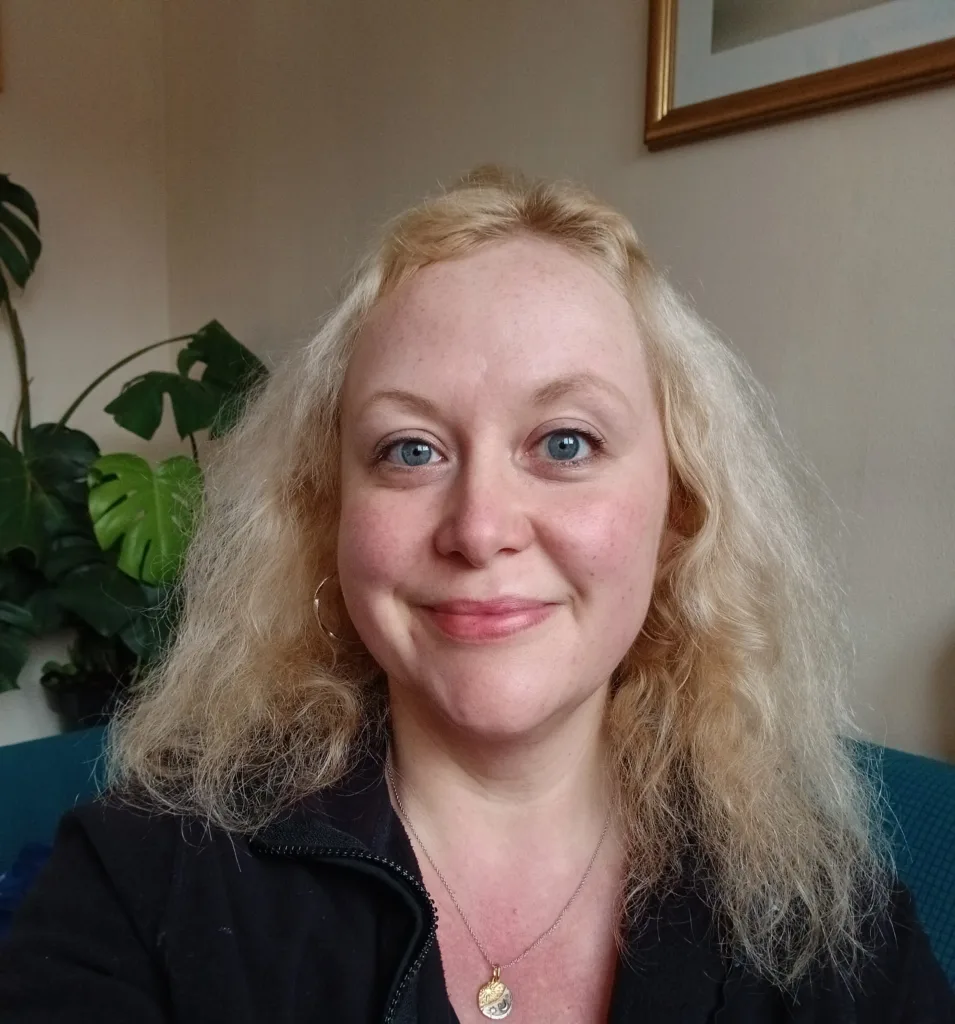
Katrin Kemmerzehl
I am a qualified psychotherapeutic counsellor in Newcastle upon Tyne.
Please get in touch if you’re interested in arranging a consultation.