Seeing yourself with kindness
30 January – written by Katrin Kemmerzehl – Blog – published in Counselling Directory

Something clicks for many adults when they realise they’re neurodivergent. It’s like finding a lost part of themselves they didn’t know was gone. Late-life diagnosis of neurodivergence is more common than we think.
Moments that seemed strange or hard to explain start fitting together. But clarity isn’t the only feeling. Sometimes sadness shows up, too, along with frustration. Growing up without help or understanding, most people never had words for why things felt draining, too much, misaligned or ‘off’.
When it all falls into place

Becoming aware of neurodivergence, be it autism, ADHD, or AuDHD, for example, can feel like flipping a switch in a familiar space. Things that never made sense begin connecting: “So that’s why things felt so difficult”.
The past comes into clearer view. People may have said you’re overwhelming, direct, distant or sensitive, even when you’ve put effort into every gesture. Perhaps you remember feeling overwhelmed when others seemed fine, listening closely, even when the actual words escaped notice, but what grabbed your attention often held you tight.
Often, a delayed diagnosis also opens the door to mixed feelings. Relief shows up, and for some, a sense of loss and frustration appears, aimed at environments built on fitting in instead of understanding, experts who labelled wrongly, and for the child once left without support.
We often gain deeper insight after diagnosis, even as sorrow surfaces about unmet needs (Lewis, 2016).
The emotional cost of fitting in

Society often pushes people to hide their true selves or change how they act. For plenty of neurodivergent individuals, that looks like concealing who they really are to fit in.
Growing out of need, some may copy gestures and quiet, instinctive reactions, overcommit, or constantly scan unwritten norms, which leaves them feeling drained.
Studies connect constant pretence to rising stress, sadness, emotional fatigue, and a fading sense of self (Hull et al., 2017). Over time, and running low on energy, they can no longer keep up appearances.
What shows up most in therapy is exhaustion. People arrive not only seeking insight, but also worn down by pretending everything’s fine. It is draining to stay quiet about their truth or bend to match expectations. Over time, disconnection creeps in, and some stop feeling much at all.
Coping methods that once helped can lose their usefulness. To face change also means reevaluating habits gently. Growth often involves releasing what no longer helps.
Trading judgment for kindness

Receiving a diagnosis, either self-diagnosed or through a health provider, may bring sudden understanding. What usually comes next is coming to terms with oneself. But after years of trying to fit in, people often feel exhausted. Being who they really are doesn’t come naturally.
Even so, understanding yourself better might lead you toward kindness for yourself. What used to feel like shortcomings could reflect how your brain responds. Not too intense, but reacting to excess stimulation. Not unmotivated, perhaps coping with overload or lack of support. If we don’t push the feelings away, we can bring back confidence in ourselves.
Bending without breaking
For lots of adults with a late diagnosis, nobody named what they were actually going through in childhood. Bullying, being rejected, or facing dismissal – these shaped life for many neurodivergent people and scars often remain. Studies point to autistic individuals carrying greater odds of emotional struggles tied to such life experiences (Stagg & Belcher, 2019).
Misreading happens a lot when minds work differently. Overwhelm got mistaken for shyness or just being too sensitive. Fascination with specific topics was written off as an unhealthy fixation. Needing structure? That often drew labels like inflexible or stubborn. Not talking much? People assume boredom.
Alone and unseen, children often come to think something is wrong with them. Over the years, and while always chasing an invisible standard, our inner voice starts to fade into silence.
Accepting yourself

Think about your effort for showing up, and how your survival and life energy carried you through. Self-acceptance grows through small actions each day that convey “I count. What I need counts too.”
Treating yourself gently could look like:
- resting when exhaustion hits
- organising your life around your energy, not others’ expectations
- allowing yourself to say “no” when things are too much and say “yes” when things feel right
- treating yourself like a good friend
- choosing environments and relationships that feel safe and supportive
When someone feels accepted, their mental well-being improves. But belonging isn’t just social; it reaches into emotional stability. Moments of being seen and accepted for who we really are can help us build that inner strength.
What matters most? Often, it is simply being supported and feeling at home in our skin.
To know oneself fully means seeing with gentler eyes

Our outlook can shift after a diagnosis. Some finally understand that it wasn’t about fitting in, but surviving without help. What felt like missteps could simply be mismatched environments. Struggles once seen as flaws could instead reflect strength.
This change of attitude lets you approach your past self with gentle attention. For autistic people and those with ADHD, being accepted by others and oneself has a positive impact on one’s mental health (Cage et al., 2018).
Seeing things differently opens room for kindness – a way to see you truly tried, using whatever understanding you had back then. Healing can begin where understanding and respect grow.
Being seen begins with self-permission

Who am I without masking? Being more authentically you begins with curiosity. Realness shows up sometimes in small choices, like giving yourself time to rest if needed instead of pushing through.
Starting small helps with allowing yourself to be who you are. A calm space, a trusted person nearby, lets hidden parts stretch out. Maybe today means asking for lights turned down, or words said exactly how we feel.
What also matters is listening to your own thoughts and feelings. Where others rush, you may pause, notice, or absorb. Creativity blooms in silence. Curiosity drives exploration beneath surfaces. These traits thrive if given room.
Choosing when to rest can be its own honest act. Realness often shows where it’s safe enough to land.
How counselling can help

Navigating life while undiagnosed can build up tension, self-doubt, and questions about who you really are.
Counselling can offer a space where you don’t have to prove yourself, where being listened to, seen and accepted really matters. Working with a neurodivergent-affirming counsellor can support you to:
- process your feelings and thoughts after diagnosis
- reduce self-blame
- learn to listen to yourself
- reconnect with your boundaries and needs
- explore ways of living that feel supportive
In therapy, you can move through thoughts and feelings at your own pace. Whatever shows up has permission and deserves space. Nothing needs to be edited before speaking.
Wherever you are now is valid. Counselling isn’t about rewriting your identity. Instead, it paves the way to see yourself more clearly, foster self-compassion and support you in making choices that feel right for you.
Moving on with compassion

Growth often moves through phases, even when tangled at first. Step by step, a clearer path begins to show.
The act of showing up as yourself matters. A diagnosis can open the door to self-discovery. Sadness and pain might show up along the way, yet so can understanding, compassion and strength,
Living more authentically becomes possible because you keep showing up. Today opens space – through care, compassion and clarity – to step ahead as yourself.
If this resonates with you, you don’t have to make sense of it alone. Therapy can offer a gentle space to explore your neurodivergent identity with kindness, clarity, and support.
If you’d like to explore this, please feel free to get in touch.
References
- Kemmerzehl, K. (2026). Late-life neurodivergent diagnosis: Seeing yourself with kindness. Counselling Directory.
- Lewis, L. F. (2016). Exploring the experience of self-diagnosis of autism spectrum disorder in adults. Archives of Psychiatric Nursing, 30(5), 575–580.
- Cage, E., Di Monaco, J., & Newell, V. (2018). Experiences of autism acceptance and mental health in autistic adults. Journal of Autism and Developmental Disorders, 48(2), 473–484.
- Hull, L., Petrides, K. V., Allison, C., Smith, P., Baron-Cohen, S., Lai, M.-C., & Mandy, W. (2017). “Putting on My Best Normal”: Social camouflaging in adults with autism spectrum conditions. Journal of Autism and Developmental Disorders, 47(8), 2519–2534.
- Stagg, S. D., & Belcher, H. (2019). Living with autism without knowing: Receiving a diagnosis in later life. Health Psychology and Behavioral Medicine, 7(1), 348–361.
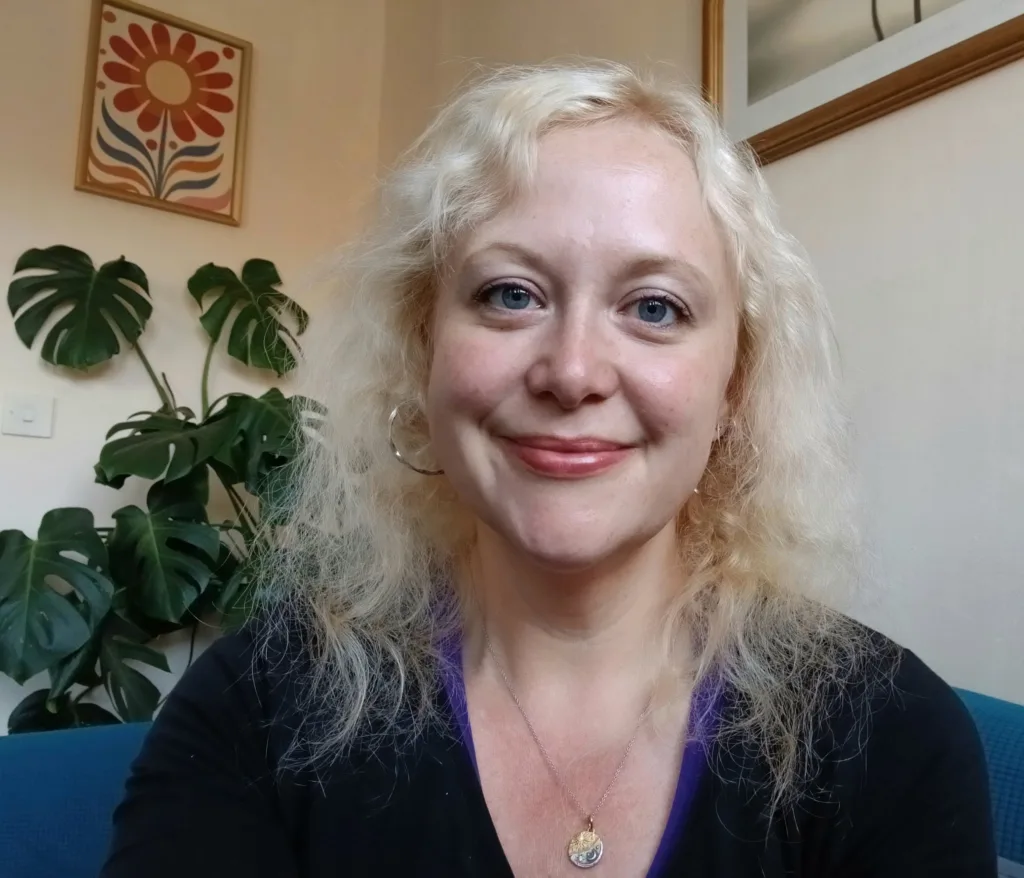
Katrin Kemmerzehl
I am a qualified psychotherapeutic counsellor in Newcastle upon Tyne.
Please get in touch if you’re interested in arranging a consultation.