Understanding relief, loss, and self-discovery after learning you’re autistic, ADHD, or AuDHD
06 June – written by Katrin Kemmerzehl – Blog

For years, you might have wondered why everyday life seemed to require so much effort.
Perhaps you were the person who appeared capable on the outside while feeling exhausted underneath. The person who replayed conversations afterwards, struggled with overwhelm that nobody else seemed to notice, or spent years trying to become more organised, more sociable, less sensitive, or somehow easier to be.
You kept adapting.You learned what was expected and found ways to manage.Then one day, you come across autism, ADHD, or AuDHD.
Suddenly, pieces of the puzzle begin to fall into place: the exhaustion, the overwhelm and the misunderstandings. The feeling of always working a little harder than everyone else seemed to have to.
For many people, that moment brings relief. Finally, there is a framework that helps make sense of experiences that may have felt confusing for years.
Yet alongside the relief, another feeling often appears: Grief. Not everyone expects that.
After all, understanding yourself better sounds as though it should feel entirely positive. And often there is validation in finally having words for experiences that previously felt difficult to explain.
At the same time, many people find themselves looking back at their lives through a different lens. Memories take on new meaning. Experiences that once felt like personal failures begin to look different:
The teacher who called you distracted.
The unspoken and sometimes confusing rules of friendship.
The exhaustion that followed a busy day, even when everyone else seemed fine.
Looking back, it can be startling to see how much effort was going into getting through ordinary life:
The mental rehearsal before social situations.
The careful monitoring of expressions and tone of voice.
The constant effort to avoid making mistakes, standing out, or getting things wrong.
Research suggests that adults who discover they are autistic later in life often experience a mixture of validation, relief, sadness, anger, and re-evaluation as they make sense of their experiences in a new way (Cook et al., 2021; Lewis, 2016).
Understanding yourself in new ways

One of the most profound aspects of discovering neurodivergence in life is that it can change the meaning of past experiences.
Situations that once felt confusing begin to make more sense. You might recognise sensory overwhelm where you once saw weakness. Burnout where you once saw a lack of resilience. Communication differences where you once assumed you were somehow getting relationships wrong.
Many autistic and AuDHD adults describe feeling as though they are revisiting their lives with a different perspective.
Research suggests that social camouflaging, often called masking, is common among autistic adults and can involve consciously or unconsciously adapting behaviour to fit social expectations (Hull et al., 2017; Pearson & Rose, 2021).
For some people, recognising this brings enormous relief. For others, it raises difficult questions about how much energy was spent trying to fit in. Often it is both.
The Grief Nobody Talks About

Sometimes the grief is about what happened. Sometimes it is about what didn’t happen.
The support that never arrived.
The understanding that was missing.
The question of whether some parts of life might have felt less difficult if you had understood yourself sooner.
For some people, there is sadness when they realise how much time was spent blaming themselves for things that now make far more sense. Others find themselves wondering what school, work, friendships, or relationships might have been like if they had known then what they know now.
There are no clear answers to those questions. Yet they arise for many people, because they are beginning to see how much effort went into navigating environments that often weren’t designed with their needs in mind.
Research exploring late diagnosis suggests that many adults experience a complex mixture of validation, relief, sadness, and re-evaluation after learning they are autistic (Lewis, 2016; Cook et al., 2021).
What Parts of Me Have Been Hidden?

As people begin making sense of their experiences, another question often emerges: “Which parts of me have been hidden underneath all that effort?”
Years of adapting to other people’s expectations can make it difficult to know what genuinely feels like your own preference, need, or way of being.
Some people reconnect with interests they gradually abandoned. Others begin noticing sensory needs they have ignored for decades.
Someone realises they actually dislike crowded events. Someone else discovers they have spent years agreeing to plans that leave them exhausted.
For some, this process involves reconnecting with interests, passions, or ways of expressing themselves that were gradually set aside in the effort to fit in (Price, 2022).
At first, there can be a lot of uncertainty. If you’ve spent years adapting to other people’s expectations, it can’t be easy to know what feels natural and what has simply become familiar.
Many people describe a period of experimentation: noticing what helps, what drains them, and which parts of life feel easier when they stop pushing themselves.
What do I actually enjoy? What do I need?
When Unmasking Can Feel Difficult

Online conversations about neurodivergence sometimes describe unmasking as freedom. And for some people, it is. For others, unmasking can feel relieving, frightening, hopeful, confusing, and complicated all at once.
There may be worries about how other people will respond. Concerns about appearing too much, too sensitive, too direct, or too different.
You may begin to notice needs that have taken a back seat for years and wonder how to make room for them now.
Many masking strategies developed for understandable reasons. They may have helped you avoid criticism, navigate social situations, or cope in environments that didn’t accommodate your needs.
Some autistic writers have suggested that masking is often less about hiding who we are and more about adapting to environments where difference is not always understood or accommodated (Price, 2022).
Seen this way, masking can be understood not simply as an individual behaviour but as a response to social expectations and the deeply human desire to belong (Pearson & Rose, 2021).
Relief and Grief Can Exist Together

Understanding yourself differently can bring enormous relief. It can also open up questions that weren’t there before.
For many people, learning about their neurodivergence is not the end of a journey but the beginning of seeing their life through a different lens.
There can be relief in finally having an explanation. At the same time, it can be emotional to look back and realise just how difficult things were for so many years.
Unmasking is rarely a single decision. More often, it unfolds gradually.
You notice something more clearly that leaves you drained. You discover something that helps. You begin paying attention to needs that may have taken a back seat for years.
However, this new understanding can’t change what has already happened. The effort was still real. The overwhelm was still real. The loneliness, confusion, or self-doubt that sometimes came with it are still part of your story.
As Irvin Yalom observed, there comes a point when we have to let go of the hope for a better past (Yalom, 2002).
Yet looking back can feel different. Many autistic adults find that diagnosis helps them make sense of past experiences in a new way and develop a kinder understanding of themselves (Crane et al., 2018). Patterns emerge where there once seemed to be only confusion. As understanding grows, self-criticism sometimes begins to make space for greater self-compassion.
Relief and grief often arrive together. There can be comfort in finally making sense of your experiences, alongside sadness for the effort it took to get here. Looking back may bring a sense of loss, even as the future begins to feel more hopeful.
Discovering more about yourself

Learning new aspects of yourself can also bring questions about identity. If the story you have told yourself for many years no longer feels complete, there can be a period of uncertainty. Things may not make sense in quite the same way as they once did, even if you are not yet sure what comes next. Although that uncertainty can feel unsettling, it can also create space for new possibilities.
You might begin to wonder what really matters to you, what helps you feel more like yourself, and what kind of relationships, work and ways of living feel sustainable.
Rather than asking how to become a different person, the process can gradually shift towards understanding what helps you feel more at ease in yourself and how you might build a life around that.
Over time, self-understanding can become more than an explanation for past experiences. It can help you make choices that fit you better and create a life that feels more meaningful and sustainable (Botha & Frost, 2020).
A Kinder Way of Looking Back

As people begin to make sense of their experiences, many find themselves spending less time wondering what they should have done differently.
Instead, they may look back and ask:
“Given what I knew at the time, how was I trying to cope?”
For many, that question brings a greater sense of compassion.
The past may still hold sadness, frustration, or regret. Yet it can become easier to recognise how much effort went into managing, adapting, and getting through.
As understanding grows, attention often begins to turn towards the present and the future. People may find themselves wondering what matters most, what supports them, and what kind of life feels possible from here.
Counselling can offer space for those conversations. A place to make sense of what has been difficult, to grieve what needs grieving, and to become more familiar with the person who has been there all along. From there, it may become easier to make choices that feel more like your own.
If you’d like to explore this, please feel free to get in touch.
References
- Botha, M., & Frost, D. M. (2020). Extending the minority stress model to understand mental health problems experienced by the autistic population. Society and Mental Health, 10(1), 20–34.
- Crane, L., Hearst, C., Ashworth, M., Davies, J., & Hill, E. L. (2021). Supporting newly identified or diagnosed autistic adults: An initial evaluation of an autistic-led programme. Journal of Autism and Developmental Disorders, 51(3), 892–905.
- Hull, L., Petrides, K. V., Allison, C., Smith, P., Baron-Cohen, S., Lai, M.-C., & Mandy, W. (2017). “Putting on My Best Normal”: Social camouflaging in adults with autism spectrum conditions. Journal of Autism and Developmental Disorders, 47(8), 2519–2534.
- Lewis, L. F. (2016). A mixed methods study of barriers to formal diagnosis of autism spectrum disorder in adults. Journal of Autism and Developmental Disorders, 46(8), 2361–2374.
- Pearson, A., & Rose, K. (2021). A conceptual analysis of autistic masking. Autism in Adulthood, 3(1), 52–60.
- Price, D. (2022). Unmasking Autism: Discovering the New Faces of Neurodiversity. Harmony Books.
- Raymaker, D. M., Teo, A. R., Steckler, N. A., Lentz, B., Scharer, M., Delos Santos, A., Kapp, S. K., Hunter, M., Joyce, A., & Nicolaidis, C. (2020). Having all of your internal resources exhausted beyond measure and being left with no clean-up crew: Defining autistic burnout. Autism in Adulthood, 2(2), 132–143.
- Yalom, I. D. (2002). The gift of therapy: An open letter to a new generation of therapists and their patients. New York, NY: HarperCollins.
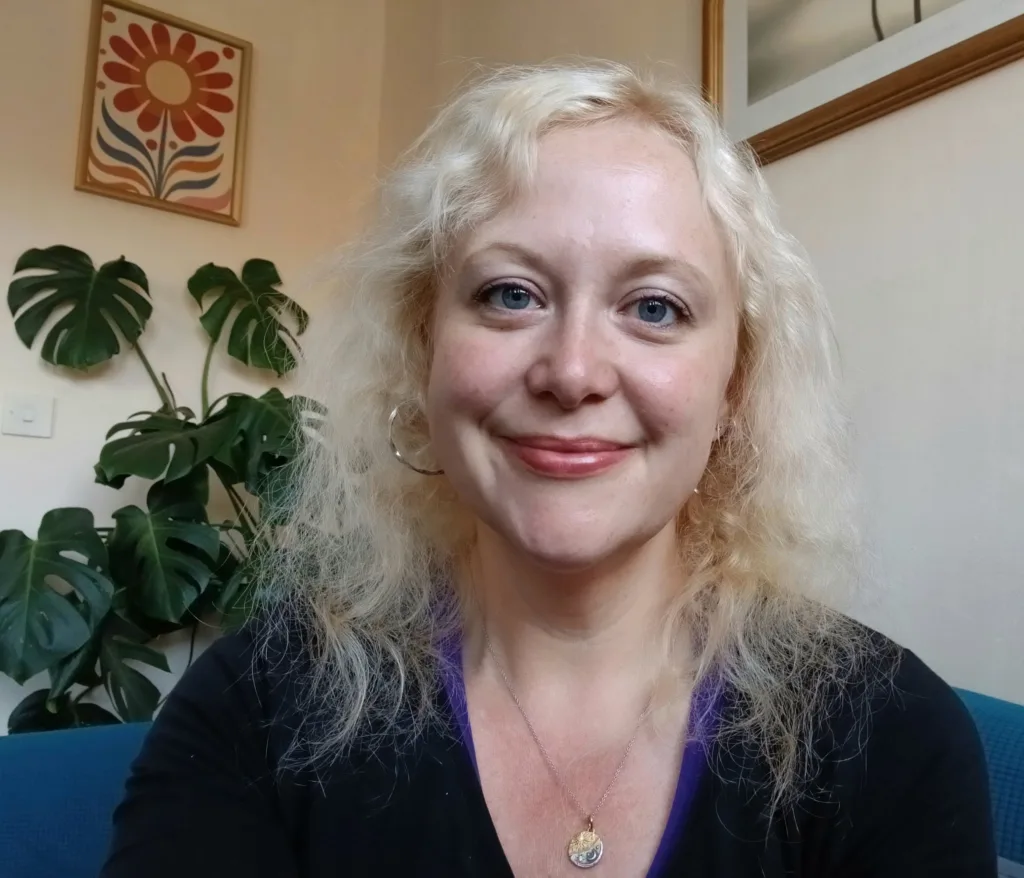
Katrin Kemmerzehl
I’m a qualified counsellor based in Newcastle upon Tyne.
Please get in touch if you’d like to arrange a consultation.