Self-Compassion and the Inner Critic
1 June – written by Katrin Kemmerzehl – Blog

Most of us know what it feels like to be disappointed in ourselves.
Perhaps a job application was unsuccessful. An exam did not go as hoped. A relationship ended. A friendship changed. Or maybe life simply isn’t unfolding in the way you imagined it would.
The disappointment itself can be painful enough.
But often something else follows. We replay what happened, compare ourselves to other people, and begin questioning ourselves. Over time, a setback can start to feel like evidence that something is wrong with us rather than what it actually is: a difficult human experience.
Many people arrive in therapy carrying this burden. They feel as though they should be coping better, achieving more, feeling happier, or somehow doing life differently. They often speak about themselves with a level of criticism they would never direct towards someone they care about.
In these moments, it can be easy to forget that disappointment is simply part of being human.
None of us move through life without setbacks, losses, mistakes, uncertainty, or periods of self-doubt. Yet when these experiences happen to us, it is easy to feel alone in them.
As Irvin Yalom (1980) observed, human beings naturally seek meaning in their experiences. When something does not go as hoped, we often look for an explanation. Rather than seeing disappointment as part of life, we may come to see it as evidence that something is wrong with us. The stories we tell ourselves can be much more painful than the disappointment itself.
When Disappointment Becomes Self-Doubt

A setback does not automatically damage our confidence. What often causes the deeper wound is the meaning we attach to it.
A friendship drifting apart may become proof that we are difficult. A rejection may feel like confirmation that we are not good enough. A challenging period at work may leave us questioning our abilities altogether.
When we are hurting, we tend to focus on what has gone wrong while overlooking the parts of the story that offer a more balanced perspective. We remember failures more vividly than successes and compare ourselves to people who appear more confident, successful, or settled than we feel ourselves to be (Vogel et al., 2014).
Social media can amplify this tendency. We are often comparing our private struggles to carefully edited snapshots of other people’s lives.
Over time, disappointment can become tangled up with self-worth. Instead of thinking, “That was difficult,” we start thinking, “There must be something wrong with me.”
The Inner Critic
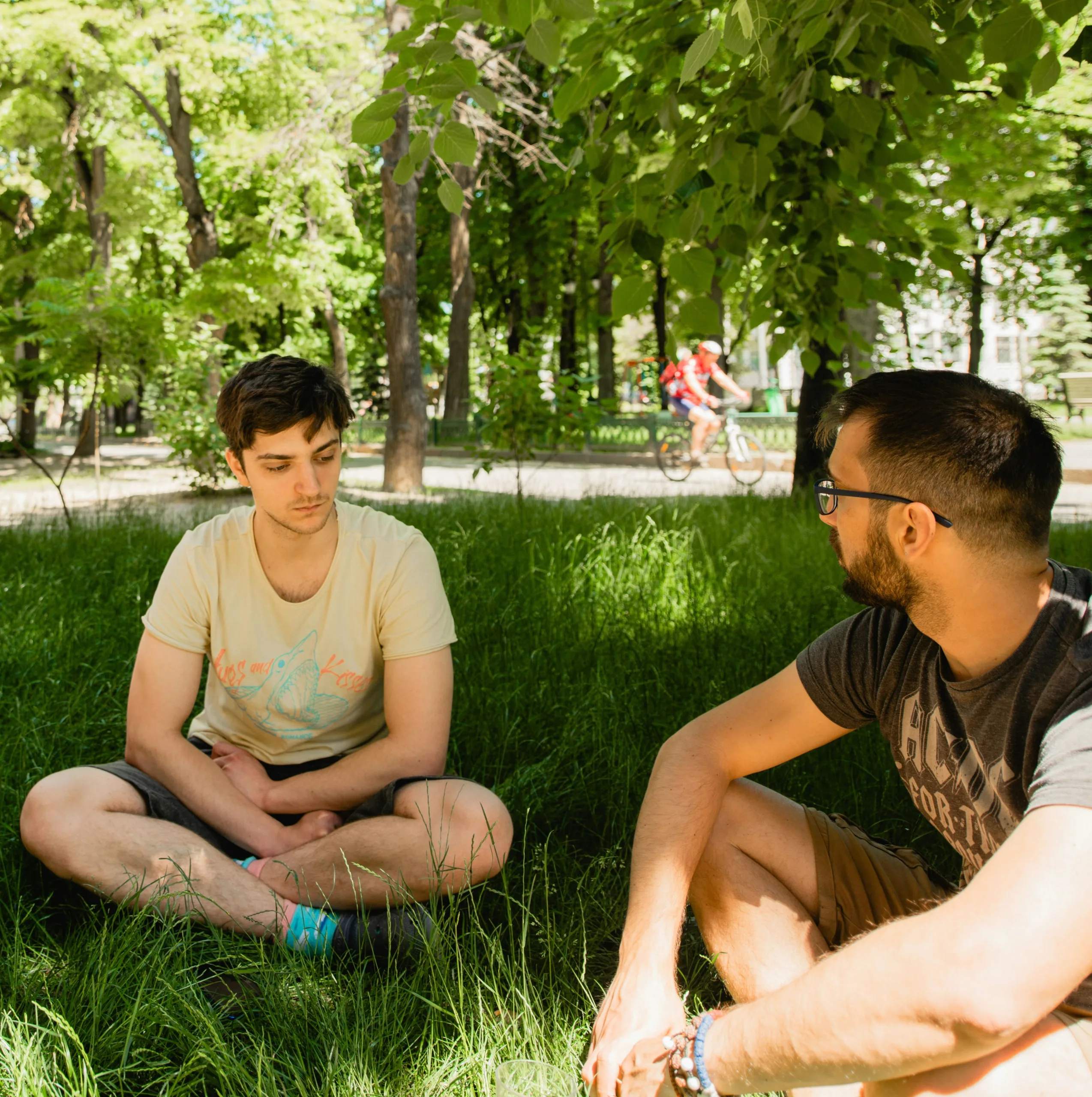
Most people have an inner critic. It is that familiar voice that appears when things go wrong. It might say:
“You should have done better.”
“Everyone else seems to manage.”
“You’ll never get this right.”
Although this voice can feel harsh, it often develops for understandable reasons. Some people grew up in environments where achievement was highly valued. Others learned early in life that mistakes felt unsafe or embarrassing. Sometimes criticism from family, school, relationships, or society becomes internalised until it starts sounding like our own voice.
Over time, self-criticism can become such a familiar habit that we stop questioning it.
When something doesn’t go as we’d hoped, it is easy to assume that the first story we tell ourselves must be true. In moments of disappointment, the stories we create can feel completely convincing. Yet they are often coloured by pain and self-judgement, making it harder to see ourselves and the situation more clearly.
Psychologist Guy Winch (2014) argues that emotional wounds deserve the same care and attention as physical ones. When we are physically injured, we would not expect ourselves to heal through criticism. Yet many people respond to emotional pain by attacking themselves at the very moment they most need understanding.
Neurodiversity and the Inner Critic

For many neurodivergent people, self-criticism does not appear out of nowhere. It can develop gradually through years of receiving messages that something about the way they think, communicate, feel, or move through the world is wrong.
Some may have been criticised for being too sensitive, too intense, too forgetful, too direct, too distant, too emotional, too distracted, or not trying hard enough.
Others may have spent years working hard to mask their difficulties, carefully monitoring how they come across or worrying about making mistakes in social situations (Miller et al., 2021).
Over time, these experiences can leave a person feeling uncertain about where they stand with others. A delayed reply, a misunderstanding, or a difficult conversation may bring up familiar fears of criticism, rejection, or letting someone down. Some people find themselves paying close attention to changes in tone, behaviour, or response, trying to work out whether a relationship still feels secure.
Research suggests that repeated experiences of misunderstanding, stigma, or exclusion can have a significant impact on self-esteem and emotional wellbeing (Milton, 2012; Cage et al., 2018).
Self-compassion does not erase these experiences, nor does it mean pretending they were unimportant. Rather, it involves learning to respond to yourself with greater understanding when old feelings of shame, inadequacy, or rejection are triggered. Instead of automatically asking, “What’s wrong with me?”, you might gradually begin asking, “What happened to me, and what do I need right now?”
For many neurodivergent people, this shift can be an important part of building a kinder and more accepting relationship with themselves.
Why Self-Compassion Matters

Psychologist Kristin Neff describes self-compassion as responding to ourselves with kindness, common humanity, and mindful awareness when we struggle (Neff, 2003; Neff, 2011; Neff, 2023).
At its heart, self-compassion involves recognising three things:
- I am finding this difficult right now.
- Struggle is part of being human.
- I can respond to myself with care rather than condemnation.
This may sound simple, but many people find it surprisingly difficult.
We often find it easier to extend compassion to other people than to ourselves. A friend makes a mistake and we reassure them that everyone gets things wrong sometimes. We remind them that one setback does not define them.
When we make a mistake, however, we may reach very different conclusions.
Self-compassion asks whether we might offer ourselves some of the same understanding we would naturally extend to someone we care about.
The Desire to Feel Good Enough

Beneath much self-criticism lies a deeply human longing: the desire to feel that we are enough.
Enough as we are.
Many people spend years believing that this feeling will arrive once they become more successful, more confident, more productive, or more certain about life.
Yet the goalposts often keep moving.
The life we imagined for ourselves and the life we are actually living are rarely identical. Relationships unfold differently than expected. Plans change. Some dreams evolve, while others never happen at all.
Part of adulthood involves coming to terms with this reality.
It means grieving not only what happened, but sometimes what did not happen. The relationship or friendship we hoped would last. The version of ourselves we expected to become. The certainty we thought we would feel by now.
Existential thinkers have long recognised that uncertainty, limitation, and disappointment are woven into the human experience (Yalom, 1980; Frankl, 2006).
Perhaps self-compassion begins when we stop treating these realities as evidence of failure.
Perhaps it begins when we recognise that being human was never supposed to look perfect.
Self-Compassion and Growth

One of the most common misconceptions about self-compassion is that it means lowering standards or avoiding responsibility.
Research suggests otherwise. People who practise self-compassion are often more willing to acknowledge mistakes, take responsibility, and learn from their experiences because they do not need to defend themselves against overwhelming shame (Breines & Chen, 2012; Neff, 2023).
Self-compassion does not mean saying, “It doesn’t matter.”
It means saying, “This matters, and I can respond to it without attacking myself.”
Carl Rogers (1961) captured this beautifully when he wrote:
“The curious paradox is that when I accept myself just as I am, then I can change.”
Acceptance is not the opposite of growth.
Often, it is what makes growth possible.
Fierce and Tender Self-Compassion

Kristin Neff (2023) describes self-compassion as having both a tender and a fierce side.
Tender self-compassion is the part that comforts us when life feels difficult. It might sound like:
“This is hard right now.”
“Anyone in my situation would be struggling.”
“I need some care and understanding.”
Fierce self-compassion, on the other hand, helps us protect ourselves and move forward when change is needed.
It might involve setting a boundary, asking for support, addressing a problem, or making a difficult decision.
Both forms matter.
Sometimes we need comfort. At other times, we need courage.
Self-compassion is not simply about soothing ourselves. It is also about supporting ourselves in living in ways that are healthy, meaningful, and aligned with our values.
Small Ways to Practise Self-Compassion

Self-compassion is less about achieving a particular state of mind and more about developing a different relationship with yourself.
You might begin by noticing how you speak to yourself after a difficult day. Would you use the same words with someone you care about?
It can also help to pause when self-critical thoughts arise and ask:
“Is this a fact, or is it a judgement?”
“What might I say to a friend in this situation?”
It can also be helpful to notice what we appreciate and what is already present in our lives, however small. Research suggests that gratitude can support wellbeing and help counterbalance our tendency to focus on what is missing or going wrong (Bartlett & Valdesolo, 2020).
These practices may seem simple, but over time they can help quiet the inner critic and create space for a kinder, more balanced perspective.
Being Human Means Struggling

One of the most painful aspects of self-criticism is the sense of isolation it creates.
We can begin to feel as though everyone else has figured life out while we alone are struggling. Yet this is rarely true.
At some point, everyone experiences disappointment, loss, uncertainty, regret, loneliness, or self-doubt. The details differ, but the experience of struggling is universal.
Recognising this does not erase the pain, but it can help ease the burden a bit. Feeling sometimes lost, isolated, or not good enough are universal feelings.
As Neff (2011) suggests, self-compassion begins when we recognise our shared humanity rather than seeing ourselves as uniquely flawed.
Moving Forward with More Kindness

Life will continue to bring challenges, disappointments, moments of connection, hope and periods of uncertainty.
Self-compassion offers a different way of meeting ourselves when life becomes difficult. Instead of responding to pain with criticism, we can respond with understanding. Instead of seeing every setback as evidence of failure, we can recognise it as part of being human.
The inner critic may never disappear completely, but over time it can become less convincing. We can learn to respond to ourselves with greater kindness, recognising our struggles without losing sight of our strengths.
After all, being human has always involved imperfection, uncertainty, and vulnerability, and that is something we all share.
If you’d like to explore this, please feel free to get in touch.
References
- AlShawi, A., & Lafta, R. (2014). Relation between childhood experiences and adults’ self-esteem. Qatar Medical Journal, 2. https://doi.org/10.5339/qmj.2014.14
- Bartlett, M., & Valdesolo, P. (2020). The paradox of power: The relationship between self-esteem and gratitude. Journal of Social Psychology, 160(1), 27–38.
- Breines, J. G., & Chen, S. (2012). Self-compassion increases self-improvement motivation. Personality and Social Psychology Bulletin, 38 (9), 1133–1143.
- Du, H., King, R. B., & Chi, P. (2017). Self-esteem and subjective well-being revisited. PLoS One, 12(8), e0183958.
- Frankl, V. E. (2006). Man’s Search for Meaning. Beacon Press. (Original work published 1959)
- Miller, D., Rees, J., & Pearson, A. (2021). “Masking Is Life”: Experiences of Masking in Autistic and Nonautistic Adults. Autism in Adulthood, 3(4), 330–338.
- Neff, K. D. (2003). Self-compassion: An alternative conceptualization of a healthy attitude toward oneself. Self and Identity, 2(2), 85–101.
- Neff, K. D. (2011). Self-compassion: The proven power of being kind to yourself. HarperCollins.
- Neff, K., & Germer, C. (2018). The Mindful Self-Compassion Workbook: A proven way to accept yourself, build inner strength, and thrive. The Guilford Press.
- Neff, K. D. (2023). Self-Compassion: Theory, Method, Research, and Intervention. Annual Review of Psychology, 74, 193–217.
- Rogers, C. R. (1961). On becoming a person: A therapist’s view of psychotherapy. Houghton Mifflin.
- Vogel, E. A., Rose, J. P., Roberts, L. R., & Eckles, K. (2014). Social comparison, social media, and self-esteem. Psychology of Popular Media Culture, 3(4), 206–222.
- Winch, G. (2014). Emotional first aid: Healing rejection, guilt, failure, and other everyday hurts. Plume.
- Yalom, I. D. (1980). Existential Psychotherapy. Basic Books.

Katrin Kemmerzehl
I’m a qualified counsellor based in Newcastle upon Tyne.
Please get in touch if you’d like to arrange a consultation.