Relationships, life changes, and the complexity of life
29 May – written by Katrin Kemmerzehl – Blog

Most people imagine relationships as something we either “have” or “don’t have”. A friendship survives or fades. A couple stays together or separates. A family remains close or becomes distant.
In reality, relationships are often much more nuanced than that. They shift alongside us as we move through different stages of life, different versions of ourselves, different losses, responsibilities, identities, and pressures. A friendship deepens, changes, or slowly fades.
Sometimes relationships become a source of comfort and steadiness during difficult periods. At other times, they can become another place where people feel overwhelmed, misunderstood, guilty, lonely, or unsure of themselves.
As the years go by, many people discover that staying connected to others can require more emotional work than they expected.
Not because they are doing relationships “wrong”, but because adult life itself can be emotionally demanding and full of change.
Over time, lives often begin pulling in different directions. One person may be adjusting to parenthood while another is grieving a relationship or trying to recover from burnout. Someone may be caring for a parent, navigating a major move, or receiving a diagnosis that suddenly helps past experiences make sense in a new way. Sometimes, people reach a point where they no longer have the energy to keep performing the version of themselves that others have come to expect.
Much of this can remain invisible to the people around us. Many people carry far more internally than they outwardly show.
Why changes can feel overwhelming

Periods of change often affect much more than practical routines or future plans.
A person might leave a job that drained them for years and still feel strangely untethered afterwards. Someone could finally move to the city they had always imagined living in, only to find themselves standing in a supermarket feeling unexpectedly emotional because even buying milk suddenly feels unfamiliar.
A relationship might end after a long time of knowing it was no longer working, yet the absence of that person can still appear unexpectedly in everyday moments: reaching for your phone to tell them something, noticing the empty side of the sofa, or passing the bench in the park where you once sat together.
Often, transitions are made up of moments like these.
For some people, change brings excitement and possibility. For others, it can create a deep sense of emotional and relational instability. Even positive changes may involve grief, uncertainty, or a feeling of no longer fully recognising yourself.
Many people describe feeling as though they are caught somewhere between older and newer versions of themselves during periods of change, an experience often associated with uncertainty, adjustment, and emotional disorientation (Bridges, 2004).
Existential and humanistic writers have long explored how periods of change can bring people into closer contact with questions around identity, meaning, loss, freedom, uncertainty, and belonging (van Deurzen, 2012). These are often the moments when life feels less certain, but also more open and reflective than it might otherwise be.
Friendships can change too

One of the more painful parts of adulthood is that friendships often change gradually rather than clearly.
People become busy, overwhelmed, partnered, burnt out, unwell, financially stretched, or consumed by caring responsibilities. Sometimes friendships deepen through this. Other times, people slowly drift into different lives without intending to.
This can create a particular kind of grief, because there is often no clear ending to mark.
A person may notice there is no one they automatically message when something important happens. Or they may realise they have spent months feeling lonely while still technically surrounded by people.
Modern life can add to this. Social media can create the impression that everyone else is more connected or emotionally fulfilled than we are. Meanwhile, many people find that maintaining closeness feels harder than they expected.
Healthy relationships are not those without difficulty. They are the relationships where people keep finding ways to notice each other more clearly, communicate more openly, and repair moments of disconnection as they arise (Perry, 2019).
Neurodivergence, overwhelm, and relationships

For neurodivergent adults, relationships and life changes can sometimes feel especially emotionally demanding.
Many autistic, ADHD and AuDHD people describe longing for connection while also finding relationships unpredictable, exhausting, or difficult to sustain alongside burnout, masking, sensory overload, or everyday demands.
Some feel tired of always initiating contact. Others worry they are “too much”, “too sensitive”, “too intense ”, or somehow not getting relationships right. A person may care deeply and still struggle to maintain communication or emotional energy consistently.
At the same time, many neurodivergent people experience relationships with enormous depth, loyalty, emotional intensity, and care.
Sometimes, communication, rejection sensitivity, overwhelm, or social fatigue are not a sign of disconnection, but of how much effort has already been going into staying connected in environments and relationships that do not always feel easy to navigate.
Research and lived experience increasingly suggest that many neurodivergent people spend significant energy adapting socially in order to maintain connection or reduce misunderstanding (Price, 2022). During periods of stress, burnout, grief, or change, that effort can become harder to sustain.
Relationships can become more emotionally charged during difficult periods

During times of stress or transition, relationships often become emotionally amplified.
A delayed message can feel loaded with meaning. A small misunderstanding may carry more weight than expected. Someone who usually feels steady in relationships may find themselves withdrawing, overthinking, or feeling more sensitive to distance or criticism.
During these periods, people often become more self-critical. Some worry they are asking for too much or becoming too difficult to be around. Others work harder to keep things steady, holding everything together for others while feeling exhausted internally.
For some, especially those who experience rejection sensitivity, even small moments of disconnection can feel unexpectedly intense. Fears around being unwanted, misunderstood, or left out may become more present during times of uncertainty or overwhelm.
At the same time, much of this energy can go into monitoring relationships, managing reactions, or trying to stay connected without disrupting anything.
The loneliness people do not always talk about

Human beings are relational by nature. Even people who value independence usually need some sense of emotional recognition or connection in order to feel grounded (Bowlby, 1988).
Yet many adults feel deeply alone.
Some become so focused on coping that they lose touch with what actually nourishes them. Others begin to notice that their relationships have become organised around managing, working, caring, or surviving rather than genuine closeness.
Often, what people long for is not more contact, but relationships where they can feel more at ease, more honest, and more themselves without having to work so hard to belong.
Rather than seeing this as a personal failing, person-centred therapy understands distress as something that can arise when people lose connection with their own needs, feelings, or ways of being (Rogers, 1961). Existential approaches similarly explore how meaning, aliveness, and connection to self can become harder to access when life becomes organised mainly around coping or expectation (Yalom, 1980).
The pressure to keep adapting

Modern culture often places a strong value on how well we adapt.We are encouraged to stay resilient, productive, flexible, socially skilled, and emotionally regulated, even when things feel difficult inside.
Yet not everything we go through can be processed quickly or in a neat, linear way.
For many neurodivergent people, this expectation of constant adjustment can begin early in life. Over time, some become highly practiced in reading the room, holding back distress, or shaping themselves in ways that feel easier for others to receive. While these strategies can support connection, they can also become tiring over time.
There can come a point where life events such as burnout, grief, illness, relationship strain, or general overwhelm slow things down enough for something else to surface beneath everyday coping.
What actually matters to me, underneath all of this?
Where do I feel most at ease, most understood, or genuinely connected?
How much of myself have I learned to set aside in order to stay connected with others?
What might a life that feels “good enough” look like, if it were shaped less by pressure and more by what feels real and sustainable?
These are not always easy questions, and they do not come with immediate answers.
Still, many people find that meaningful connection has less to do with performing well in relationships, and more to do with slowly becoming more fully themselves within them.
Creating a life with room for connection

As we get older, many of us begin to realise that a meaningful life is not necessarily the same as a life that is constantly being optimised.
When life has been shaped around work, responsibility, coping and trying to improve ourselves, there can be very little room left for rest, friendship, closeness or simply asking what we actually want.
For some people, especially after years of masking, over-adapting or pushing through, this can lead to a quieter question: what would make life feel more like my own? It might mean having more realistic expectations of ourselves, noticing our limits earlier, choosing relationships that feel more mutual, or making space for rest and interests that do not need to be productive.
This does not make relationships simple or pain-free. But when there is less pressure to perform or constantly adapt, there can be more room to be yourself, have needs and limits, and stay connected without losing yourself in the process.
A space to bring your thoughts and feelings

Counselling can offer is a space where you don’t have to carry all of this alone, where you can bring what feels important in your relationships, including times of feeling misunderstood, unsure, or more sensitive in connection, and where it can be met with understanding.
Some people come to therapy because a relationship has broken down. Others come because they feel a bit disconnected, worn down by the effort of coping, or unsure why things feel heavier than they used to.
Often, underneath this is something very human. A wish to feel understood, to feel more steady in relationship with others, and to not always have to hold everything together alone.
If you are struggling with relationships, life changes, overwhelm, a sense of disconnection, or navigating life as a neurodivergent person, counselling may offer a space to pause, reflect, and begin making sense of what you are carrying, and what might feel more possible for you moving forward.
If you’d like to explore this, please feel free to get in touch.
References
- Bowlby, J. (1988). A secure base: Parent-child attachment and healthy human development. Basic Books.
- Bridges, W. (2004). Transitions: Making sense of life’s changes (2nd ed.). Da Capo Press.
- Frankl, V. E. (2006). Man’s search for meaning. Beacon Press. (Original work published 1946)
- Gottlieb, L. (2019). Maybe you should talk to someone. Scribe.
- Perry, P. (2019). The book you wish your parents had read (and your children will be glad that you did). Penguin.
- Price, D. (2022). Unmasking autism: Discovering the new faces of neurodiversity. Harmony Books.
- Rogers, C. R. (1961). On becoming a person: A therapist’s view of psychotherapy. Constable.
- van Deurzen, E. (2012). Existential counselling & psychotherapy in practice (3rd ed.). SAGE Publications.
- Yalom, I. D. (1980). Existential psychotherapy. Basic Books.
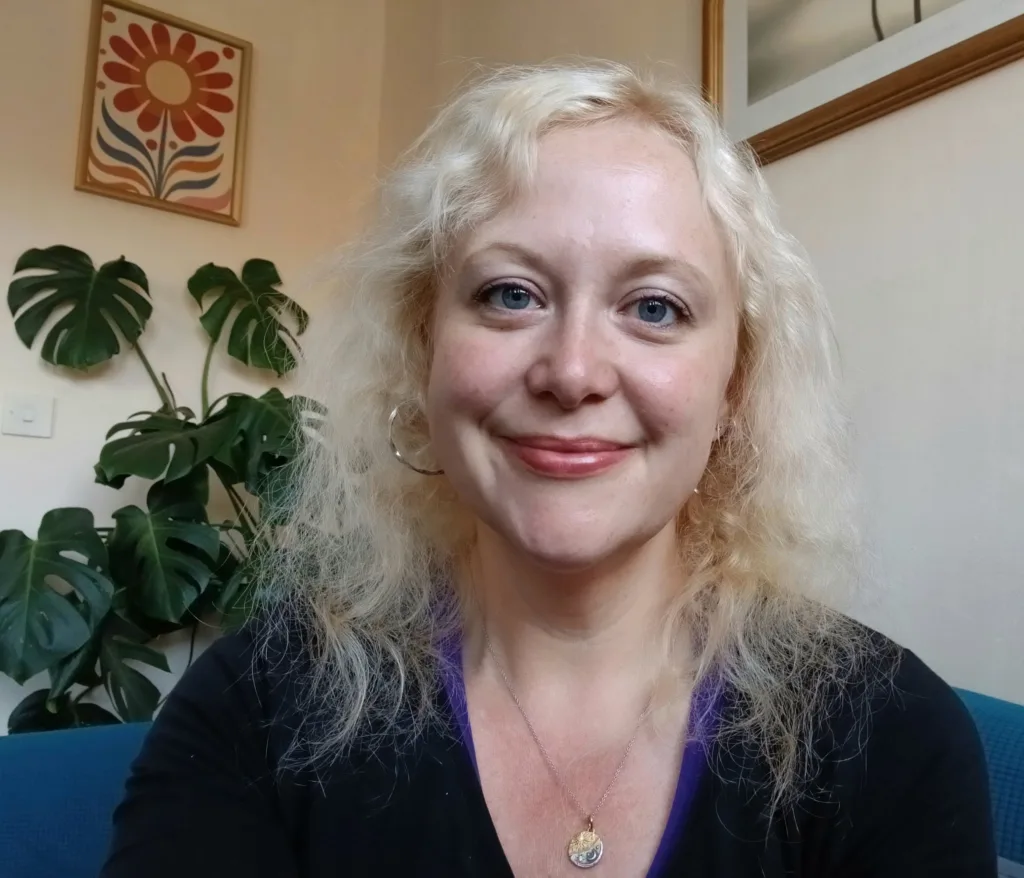
Katrin Kemmerzehl
I’m a qualified counsellor based in Newcastle upon Tyne.
Please get in touch if you’d like to arrange a consultation.