Exploring change, identity, and the questions that can arise along the way
6 Sept – written by Katrin Kemmerzehl – Blog

There are times when life changes on the outside, and somehow you feel the change on the inside too.
Sometimes you know exactly what has changed. A relationship ends, you lose work or start a new job, move home, become a parent, choose a life without children, your family life changes, or someone you love dies.
Perhaps you receive a diagnosis that changes how you understand yourself, or you reach a point where the life you have built no longer feels like the life you want.
And then there are the transitions that are harder to put your finger on. You might be in your 20s and wondering whether you are on the right path, while everyone around you seems to be moving forward.
In your 30s, perhaps you are balancing work, relationships, family life, friendships and all the expectations that seem to come with adulthood, while wondering where you fit into it all.
Later on, relationships may have changed over the years, or perhaps you are starting again after a separation. Friendships can shift, work may no longer feel as meaningful as it once did, and you might find yourself thinking more about the years ahead and what you want them to look like.
Maybe your role within the family is changing, or your children are becoming more independent. Or perhaps you have chosen a life without children, hoped to have them but it didn’t happen, or simply found that life took you in a different direction.
You might find yourself caring for ageing parents while also thinking about your own future, or wondering whether you really want to spend the next 20 years doing the same thing.
Sometimes there isn’t one particular thing you can point to. You might notice it instead in small, everyday moments. Perhaps you’re spending more time scrolling on your phone, putting off things you’d normally get done, or simply moving through your usual routines without feeling as connected to them.
From the outside, life might look much the same. You go to work, make dinner, answer messages, see friends, look after your family and keep things moving. On paper, everything might seem fine. But somehow, something inside you doesn’t feel right.
You may find yourself wondering what matters to you now, whether the life you’re living still feels like yours, or what you actually want from this next stage of your life.
And perhaps, slowly, a few questions start to come up:
Is this really what I want?
Who am I now?
When life changes, we change as well
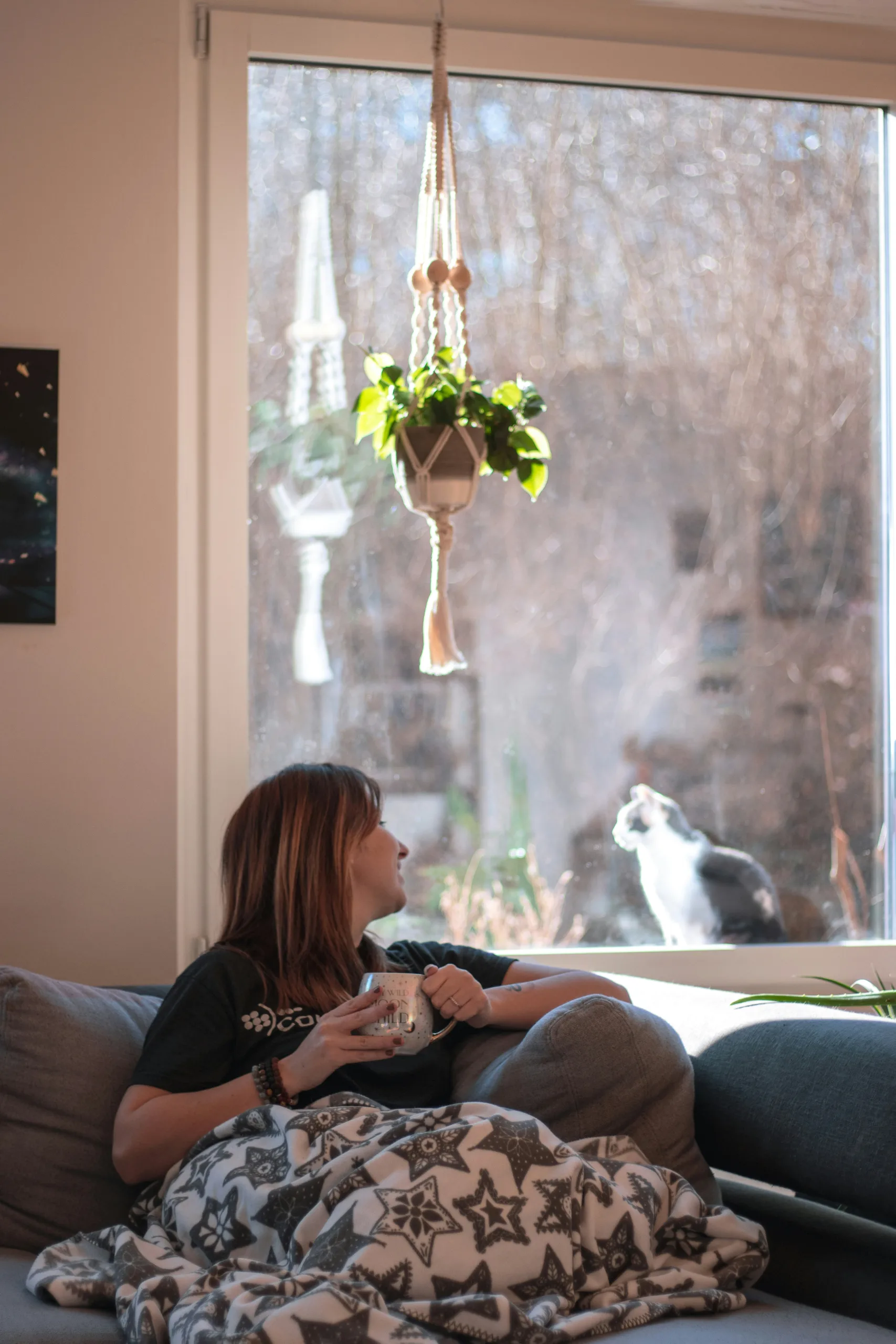
We often think of identity as something fixed, something we figure out once and then carry with us. But our sense of who we are can change as life changes around us. Relationships, work, family and the experiences we go through can all shape how we see ourselves.
Both developmental and existential perspectives recognise that identity continues to develop throughout our lives. We don’t necessarily arrive at one final version of ourselves. We keep changing, discovering and sometimes questioning who we are (Erikson, 1968; Yalom, 2008).
Sometimes you notice these changes gradually. A role that once felt natural no longer seems to fit. A familiar routine starts to feel restrictive, or the way you’ve been living no longer feels quite right.
You may sense that something has changed without knowing what comes next. And being in that in between space can leave you wondering where you are now, what you want, and perhaps even who you are becoming.
The in-between space: not who you were, not yet who you will be

At some point in our lives, we may find that things we once enjoyed, valued or felt sure about no longer feel the same. You might catch yourself thinking, “I used to like this,” or “This used to make sense to me.”
And yet, you may not know what you want instead. You can find yourself somewhere in between. No longer exactly where you were, but not yet sure where you’re going. That can feel unsettling, especially when there isn’t a clear answer waiting for you.
This can be a natural part of moving through change, especially when whatever comes next isn’t clear yet (Bridges, 2004, Cooper, 2008). You don’t necessarily need to have it all figured out. Sometimes there is value in giving yourself some space to notice what has changed and what is beginning to matter to you now.
There can also be a sense of loss in this process. Perhaps life hasn’t turned out as you had imagined, or you’re letting go of an idea of who you thought you would be. As Lori Gottlieb explores, there can be a sense of grief when life doesn’t turn out as we imagined, alongside the possibility of discovering something that feels more right for who we are now (Gottlieb, 2021).
Sometimes, this is what brings people to counselling. Not necessarily because something is wrong, but because something feels different. You might feel a little disconnected from yourself, uncertain about what comes next, or aware that parts of your life no longer feel as comfortably as they once did.
Counselling can offer a space to slow things down and explore what is happening. To make sense of what has changed, reconnect with what matters to you, and begin to think about what you might want to carry forward into this next part of your life.
These feelings can be a natural part of finding your way through change. Sometimes they can be an invitation to pause and listen to yourself a little more closely.
Discovering Your Path in Your 20s

Your 20s can be a funny time. You’re old enough to be making your own decisions, but you might still feel like you’re trying to work out what those decisions are supposed to be.
You might be starting work, leaving education, looking for a job, moving away from home, or figuring out relationships. Or you might be living at home, trying to move out, and wondering what you want to do next.
However life looks for you, there can be a lot to work out during this time, including what you actually want your life to look like.
And it’s easy to feel as though you should know by now. You look around and see friends buying houses, getting married, travelling, building careers or moving into their own places. You can be genuinely happy for them and still have that uncomfortable thought: What am I doing? Am I falling behind?
Sometimes it can feel as though everyone else was given a map and yours somehow got lost.
Friendships can change too. People move, relationships become more serious, work gets busier and suddenly the people you used to see all the time are living very different lives. You might miss how things used to be, while also realising that you’re changing too.
And perhaps you’re starting to notice parts of yourself that you didn’t have much space for before. What you actually enjoy, what drains you, what you need from other people, and what you’ve been doing because it felt expected of you.
If you’re neurodivergent, you might also start to wonder how much of your life really feels like you, and how much has been shaped by years of adapting, masking or trying to fit in.
Sometimes it might feel as if you don’t know what you want yet. You can desire more independence while still wanting the comfort of home.
You can feel excited about the future and have no idea what you’re doing with it. And sometimes, something you once felt certain about doesn’t feel right anymore.
Your 20s and the years that follow can involve a lot of trying things out, changing direction and working out what feels right for you. Also called “emerging adulthood”, it’s a part of life when questions about who we are, what we want and how we want to live can come up naturally (Arnett, 2000).
You don’t need to have it all figured out. Sometimes it takes time to work out what matters to you, what you want and where you’re heading. There’s no need for everything to be clear all at once.
Perhaps an important question could be: “What actually feels right for me?”
The rush hour of life: balancing relationships, work and yourself

For many people, the years from their 30s into their 40s can feel particularly full. Work, relationships, family and everyday life can all seem to need something from you at the same time. There may be a lot to hold together, with very little space to stop and ask yourself how you’re actually doing.
You get through the days, reply to messages, sort things at home, support other people and try to remember what you were supposed to do five minutes ago. From the outside, life may look perfectly fine. Inside, though, you might feel tired and wonder when you last had much space to think about yourself.
Relationships can change too. Perhaps you find yourselves having the same conversations without really getting anywhere, or noticing that you need different things from each other.
Work and family commitments can also change the shape of everyday life. Sometimes these changes bring people closer, while at other times they can leave things feeling a little more complicated.
Or perhaps you’re single and thinking about what matters to you in this part of your life, whether that includes a relationship or not.
Friendships can change too. Life gets busier, people move, relationships become more serious, children come along, or priorities change. The friendships that once happened easily can take more effort, and there can be a strange sadness in realising that you don’t see some people in the way you once did. These changes can be a natural part of how relationships develop over time (Carstensen, 1999).
Work can bring its own questions. Perhaps you’ve reached a point where you are doing what you always thought you would do, but find yourself wondering what comes next. Maybe a job has ended, something new has appeared, or you’ve started to question how much of your life is being spent keeping everything going.
For some people, becoming a parent changes the way they see themselves. For others, children growing up and becoming more independent can bring a different kind of change. And for some, life without children brings its own questions about what matters and what they want their life to look like. There isn’t one way adulthood is supposed to unfold.
Sometimes something more personal comes into the picture. A diagnosis of ADHD, autism or AuDHD, or beginning to understand yourself through a neurodivergent lens, can bring a new understanding of things.
It can be a relief to have some pieces fall into place, while also leaving you looking back at your life in a different way.
And perhaps, somewhere amongst all of this, there comes a point when you start to wonder about yourself again. What matters now? What feels important? What has been missing? What would you like a little more space for?
Sometimes it isn’t about finding the right answer. It can be about having enough space to hear your own thoughts again and notice what feels meaningful to you.
Finding What Fits Now: Midlife and Beyond

As life moves on, you may find yourself looking at things a little differently. Perhaps you are in your 40s, 50s, 60s, or beyond, and have started wondering what you want the years ahead to feel like.
You may have spent years building a career, looking after other people, keeping a family going, or just getting on with what needed to be done. Then, somewhere along the way, a question can emerge: Is this how I want the years ahead to feel?
Midlife can bring change and reflection, but also growth, possibility and a clearer sense of what matters (Lachman, Teshale and Agrigoroaei, 2015). You may still value the work, relationships and life you have built, while wanting a little more space for yourself to slow down, think, or reconnect with parts of yourself that have been put aside.
Relationships can change too. Friendships may become less spontaneous, children become independent, and family responsibilities can shift.
You might find yourself missing the ease of earlier years, when seeing someone for a coffee did not require several weeks of diary negotiations. For some, this stage also brings questions about the life they have chosen, including those who have followed a different path from the one they once imagined.
There can be a growing awareness of time, too. A birthday, a change in family life, or the feeling that certain years have passed can make you pause.
Perhaps there is something you would still like to do, something you want to rediscover, or simply a desire for everyday life to feel more like your own. Sometimes, there is no big midlife crisis at all. Just a growing sense that something has shifted, and a curiosity about what might come next.
As Yalom (2008) suggests, becoming more aware of life’s limits can bring us closer to questions of meaning and what matters most. There may be less interest in getting everything right and more in living in a way that feels authentic.
For some people, this period also brings a new understanding of themselves. Seeing yourself through a neurodivergent lens, for example, can cast earlier experiences in a different light. Years of masking, adapting or trying to meet expectations may suddenly make more sense.
Research into later autism diagnosis has described this mixture of relief, more complicated feelings about the past, and greater self-understanding (Leedham et al., 2020).
Later life brings its own changes: retirement, shifting family roles, loss, and changes in the people and routines that have shaped everyday life.
Some losses can be deeply painful, particularly when they alter not only who is around you but how you see your place in the world. Grief may not simply disappear, but it can become something we learn to carry as life continues (Samuel, 2022).
Alongside this, there can also be unexpected richness, such as a new interest, a relationship that becomes more important, time for something you never had space for, and a greater appreciation and comfort in an ordinary day.
There may be less certainty about what lies ahead, but perhaps more freedom to ask: What matters to me? How do I want to use the time that’s left?
Getting to know who you are now

If life has changed and you may find yourself wondering who you are within it, you are not alone. Sometimes these moments invite us to slow down and listen to what is going on beneath the surface. Finding yourself again isn’t always about returning to who you were. Sometimes, it’s about discovering who you are now.
Counselling can offer a space to pause, reflect and make sense of what matters to you. If you’d like to explore this together, please get in touch.
References
- Arnett, J.J. (2000) ‘Emerging adulthood: A theory of development from the late teens through the twenties’, American Psychologist, 55(5), pp. 469–480.
- Bridges, W. (2004) Transitions: Making Sense of Life’s Changes. 2nd edn. Cambridge, MA: Da Capo Press.
- Carstensen, L.L., Isaacowitz, D.M. and Charles, S.T. (1999) ‘Taking time seriously: A theory of socioemotional selectivity’, American Psychologist, 54(3), pp. 165–181.
- Cooper, M. (2008) Essential Research Findings in Counselling and Psychotherapy: The Facts Are Friendly. London: SAGE.
- Erikson, E. H. (1968). Identity: Youth and Crisis. New York, NY: W. W. Norton & Company.
- Gottlieb, L. (2021). Maybe you should talk to someone. Scribe Publications.
- Lachman, M.E., Teshale, S. and Agrigoroaei, S. (2015) ‘Midlife as a pivotal period in the life course: Balancing growth and decline at the crossroads of youth and old age’, International Journal of Behavioral Development, 39(1), pp. 20–31.
- Leedham, A., Thompson, A.R., Smith, R. and Freeth, M. (2020) ‘“I was exhausted trying to figure it out”: The experiences of females receiving an autism diagnosis in middle to late adulthood’, Autism, 24(1), pp. 135–146.
- Samuel, J. (2022) Every Family Has a Story: How to Grow and Move Forward Together. London: Penguin Life.
- Yalom, I.D. (2008) Staring at the Sun: Overcoming the Terror of Death. San Francisco, CA: Jossey-Bass.
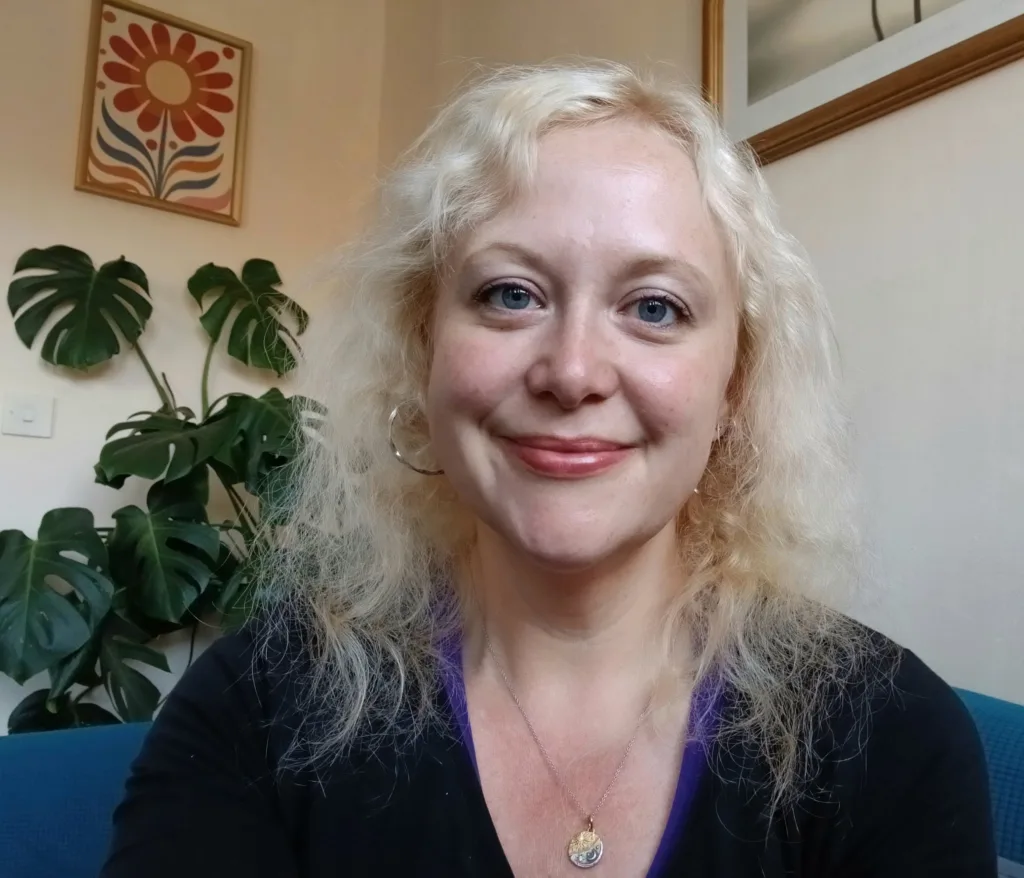
Katrin Kemmerzehl
I’m a qualified counsellor based in Newcastle upon Tyne.
Please get in touch if you’d like to arrange a consultation.